


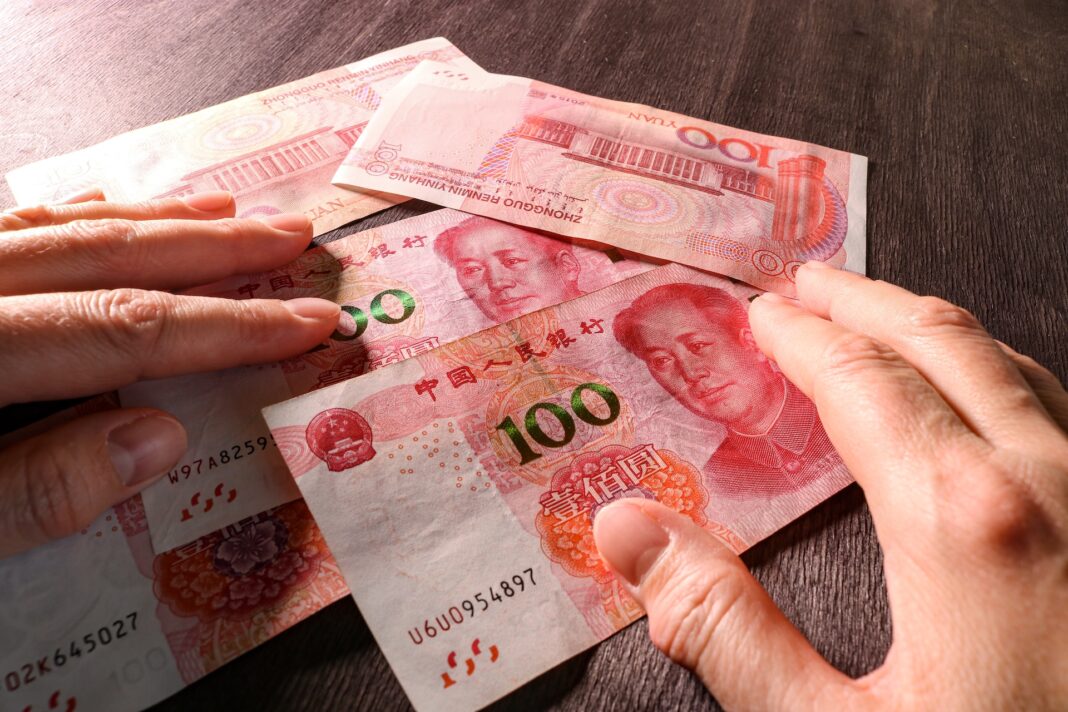
Asian currencies have returned to the centre of global market attention. The Japanese yen has fallen to its weakest level in four decades, while the Chinese yuan continues to influence trade flows, commodity prices and the competitiveness of manufacturers around the world.
However, the two currencies are not following exactly the same trajectory. While the yen is clearly under pressure, the usd to cny exchange rate today shows that the yuan has recently strengthened against the US dollar. Its relative weakness is more visible against the euro and when compared with the strength of China’s export sector.
Understanding these differences is essential for investors, exporters and companies with exposure to Asian markets.
USD to CNY Exchange Rate Today: Where Does the Yuan Stand?
As of July 23, 2026, the usd to cny exchange rate today stood at approximately 6.77 Chinese yuan per US dollar. In practical terms, one dollar could buy around 6.77 yuan.
The exchange rate was close to 6.80 yuan per dollar one month earlier. Because fewer yuan are now needed to purchase one dollar, the Chinese currency has strengthened slightly against the US currency during this period.
This movement is part of a wider appreciation trend. The yuan strengthened to its highest level in roughly three years in May 2026, supported by strong exports and growing foreign-currency inflows. Beijing has nevertheless been cautious about allowing the currency to appreciate too quickly, as a stronger yuan could make Chinese goods more expensive abroad and reduce the competitiveness of exporters, according to Reuters.
The current rate therefore does not support a simple narrative of a collapsing or exceptionally weak Chinese currency. The yuan is stronger against the dollar than it was at the beginning of 2026, although its valuation remains politically and economically controversial.
Read also: China: yuan breaks key level as trade war escalates
Is the Chinese Yuan Really Weak?
Whether the yuan is considered weak depends largely on the currency used for comparison and on the economic fundamentals behind the exchange rate.
Against the US dollar, the yuan has appreciated. Against the euro, however, analysts continue to view the Chinese currency as significantly undervalued. This gives Chinese exporters an advantage in European markets, particularly in industries such as electric vehicles, batteries, solar panels, machinery and consumer electronics.
China’s export engine remains remarkably strong. Chinese exports denominated in US dollars increased by 27% year on year in June 2026, while imports rose by 36%, according to Chinese customs data reported by Reuters.
The country also recorded a trade surplus of approximately $126 billion during the month. China exported more than one million vehicles, placing further pressure on European carmakers such as Volkswagen and BMW. The combination of highly integrated supply chains, lower production costs and a competitively valued yuan is making it increasingly difficult for Western manufacturers to compete.
Some economists have described this development as a new “China shock”. A Reuters analysis of the euro-yuan relationship highlighted concerns that the yuan remains undervalued relative to the euro, amplifying the price advantage enjoyed by Chinese manufacturers.
China Does Not Allow the Yuan to Float Freely
The yuan differs from freely traded currencies such as the euro, pound or Japanese yen. The People’s Bank of China manages its value through a daily reference rate, known as the central parity rate or fixing.
The currency is then permitted to trade within a controlled band around this reference point. Beijing can also influence the market through state-owned banks, foreign-exchange reserve requirements and purchases or sales of US dollars.
This system allows Chinese authorities to limit volatility and prevent sudden speculative moves. It also means that the usd to cny exchange rate today is influenced not only by supply and demand but also by government policy.
China must maintain a difficult balance. A weaker yuan supports exporters and can help offset the impact of tariffs. At the same time, excessive depreciation could encourage capital outflows, increase the cost of imported energy and undermine confidence in Chinese financial assets.
A rapidly strengthening yuan would create the opposite problem. It would increase the purchasing power of Chinese companies and households but could weaken exports at a time when domestic consumption and the property sector remain fragile.
Chinese Interest Rates Remain Low
Monetary policy is another important factor affecting the usd to cny exchange rate today. China’s benchmark one-year loan prime rate has remained at 3%, while the five-year rate, which influences mortgage pricing, has stayed at 3.5%.
A Reuters survey published in July showed that market participants expected both rates to remain unchanged for a fourteenth consecutive month. Policymakers have so far resisted aggressive monetary easing despite weak household consumption and slower economic growth.
Lower interest rates would support borrowing and economic activity, but they could also reduce the attractiveness of yuan-denominated assets and place downward pressure on the currency.
China’s economy is currently sending mixed signals. Manufacturing and exports remain strong, while domestic consumption, property investment and local-government finances continue to face difficulties. This divergence limits the People’s Bank of China’s room for manoeuvre.
Read also: Russia in talks with China over yuan loan, Russian minister says
The Japanese Yen Is Facing a Much Deeper Decline
The situation in Japan is considerably more dramatic. As of July 23, 2026, one US dollar was worth more than 163 Japanese yen. This placed the yen near its weakest level since 1986.
The currency was trading at approximately 161 yen per dollar one month earlier. Its continued decline has increased speculation that the Japanese government could intervene directly in the foreign-exchange market.
Japan’s Finance Minister Satsuki Katayama reiterated that the government was prepared to take decisive action as the yen hovered close to a 40-year low. The currency had briefly fallen to around 163.24 per dollar before recovering slightly, Reuters reported.
Japan already spent a record 11.7 trillion yen, equivalent to approximately $72 billion, on currency intervention between late April and early May 2026. The operation temporarily strengthened the yen but failed to reverse its longer-term decline, according to Reuters.
Why Is the Yen So Weak?
The most important factor behind the yen’s weakness is the interest-rate gap between Japan and the United States.
When US bonds and deposits offer higher returns than comparable Japanese assets, investors have an incentive to sell yen and purchase dollars. Many also borrow in yen at relatively low interest rates and invest the proceeds in higher-yielding assets elsewhere.
This strategy is known as the carry trade. It can generate profits while exchange rates remain stable, but it also increases selling pressure on the funding currency.
The Bank of Japan raised its policy interest rate to approximately 1% in June 2026. It was another step away from the ultra-loose monetary policy that dominated Japan for decades. Nevertheless, Japanese interest rates remain low relative to those in the United States.
The Bank of Japan’s June monetary policy decision also indicated that financial conditions would remain accommodative and that further decisions would depend on economic activity, inflation and financial-market developments.
Investors therefore expect the central bank to raise rates only gradually. Unless the interest-rate differential narrows substantially, the yen may continue to face downward pressure.
How a Weak Yen Affects Japan
A weak yen can initially benefit major Japanese exporters. Companies selling cars, electronics and industrial equipment abroad earn revenue in dollars and euros. When those earnings are converted back into yen, they become more valuable.
This can boost the profits of Japanese corporations and support the country’s stock market. It may also make Japan cheaper for foreign tourists and increase demand for travel, hotels and retail services.
The negative effects are increasingly difficult to ignore, however. Japan imports much of its energy, food and industrial raw materials. A weaker currency makes these imports more expensive and increases costs for both companies and households.
Higher oil prices make the problem particularly serious. When the price of crude oil rises while the yen is falling, Japanese buyers face two simultaneous increases: the commodity itself becomes more expensive in dollars, and each dollar costs more yen.
This can accelerate inflation, reduce household purchasing power and force the Bank of Japan to raise interest rates more quickly than it would otherwise prefer.
The Global Impact of Weak Asian Currencies
Movements in the yuan and yen affect markets far beyond China and Japan. Both countries play central roles in international trade, manufacturing and finance.
A competitively valued yuan can help keep the prices of Chinese goods low in international markets. This may reduce consumer-goods inflation in importing countries, but it also creates pressure on domestic manufacturers that cannot match Chinese production costs.
European industries are particularly exposed. Carmakers, machinery producers, chemical companies and renewable-energy manufacturers increasingly face competition from Chinese businesses with large economies of scale and deeply integrated supply chains.
However, currency valuation is only one part of China’s advantage. A Reuters Breakingviews analysis argued that even a substantial appreciation of the yuan would not eliminate China’s manufacturing lead. Infrastructure, industrial policy, supply-chain integration and production capacity are equally important.
The Yuan Influences Other Asian Currencies
The yuan is often treated as a reference point for currencies across emerging Asia. When China allows its currency to weaken, neighbouring export-oriented economies may face pressure to tolerate depreciation of their own currencies.
Otherwise, manufacturers in countries such as South Korea, Taiwan, Thailand or Vietnam could lose competitiveness relative to Chinese producers.
A weaker yuan can therefore place pressure on the South Korean won, the Taiwanese dollar and several Southeast Asian currencies. It can also influence the Australian dollar because China is one of the world’s largest buyers of iron ore, coal and other commodities.
A stronger yuan may have the opposite effect. It can support other Asian currencies, increase China’s purchasing power and make imported commodities more affordable for Chinese businesses.
Yen Carry Trades Create Risks for Global Stocks
The yen has a different but equally important role in global finance. Because Japanese borrowing costs have historically been extremely low, investors have used the currency to finance investments in US stocks, bonds, emerging-market assets and cryptocurrencies.
As long as the yen gradually weakens, these carry trades can remain profitable. Problems arise when the currency suddenly strengthens.
A government intervention or an unexpected Bank of Japan rate increase could force traders to purchase yen to repay their loans. If many investors close their positions simultaneously, they may also have to sell stocks and other assets.
This means a rapid yen recovery could trigger volatility across global financial markets. The greatest danger may therefore not be continued gradual depreciation, but a sudden and disorderly reversal.
Could Japan Intervene Again?
Japan has considerable financial resources available to support its currency. The country held approximately $1.29 trillion in official reserve assets at the end of June 2026, according to the Japanese Ministry of Finance.
The government can sell part of its dollar reserves and use the proceeds to purchase yen. Such operations can cause sharp movements, particularly when trading volumes are low or investors are heavily positioned against the Japanese currency.
However, intervention cannot permanently resolve the underlying problem if the gap between US and Japanese interest rates remains wide. Traders may use any temporary strengthening of the yen as another opportunity to sell it.
Japanese officials generally avoid identifying a specific exchange rate that would automatically trigger intervention. They focus instead on the speed of depreciation and whether currency movements are considered excessive or speculative.
What Investors Should Watch
Investors tracking the usd to cny exchange rate today should pay attention to the People’s Bank of China’s daily fixing, Chinese interest-rate decisions, export figures and cross-border capital flows.
A sustained move below 6.75 yuan per dollar would indicate further appreciation of the Chinese currency. A return towards 7 yuan per dollar could suggest that economic weakness, monetary easing or capital outflows are beginning to outweigh support from exports.
For the yen, the area above 160 per dollar remains politically sensitive. A further move towards 165 could increase the probability of direct intervention, especially if the decline becomes rapid.
US monetary policy will also be crucial. Higher US interest rates or rising Treasury yields would support the dollar and increase pressure on Asian currencies. Expectations of Federal Reserve rate cuts could narrow interest-rate differentials and provide relief to both the yen and the yuan.
Oil prices represent another important risk. Expensive energy combined with a weak yen would place additional pressure on Japanese inflation and the country’s trade balance.
Outlook for the USD to CNY Exchange Rate Today
The usd to cny exchange rate today shows that the Chinese yuan is currently more stable than the term “weak yuan” might suggest. The currency has strengthened against the dollar during 2026, supported by robust exports and Beijing’s tightly managed exchange-rate policy.
Its relative undervaluation nevertheless remains important for global trade. A competitively priced yuan reinforces China’s position in manufacturing and increases pressure on European and Asian competitors.
The Japanese yen faces a more immediate crisis. Its decline to a 40-year low supports exporters but increases import costs, adds to inflation and raises the possibility of another government intervention.
For global investors, both currencies deserve close attention. The yuan will influence trade balances and manufacturing competition, while the yen could become a source of financial-market volatility if carry trades unwind suddenly. The key question is therefore not only how weak these currencies become, but also how governments and central banks respond.