


Copper is becoming one of the most closely watched commodities in global financial markets. As demand grows from electric vehicles, electricity grids, renewable energy and industrial infrastructure, investors are increasingly looking for ways to benefit from its long-term potential. But investing in copper is not as straightforward as buying a stock. Mining companies, futures contracts, exchange-traded funds and physical metal all offer different opportunities, costs and risks. So, how can investors gain exposure to copper, and which approach makes the most sense? And how to invest in copper?
Copper plays a central role in the global economy. Its electrical conductivity, durability and versatility make it essential for everything from residential construction and industrial machinery to advanced power networks and electric vehicles.
The long-term investment case has attracted considerable attention. According to the International Energy Agency’s Global Critical Minerals Outlook 2026, the projected copper supply deficit in 2035 could reach approximately 25% under its stated assumptions about demand and the development of mining projects.
Such projections suggest that copper supply could struggle to keep pace with demand. However, a potential future shortage does not guarantee rising prices. Economic slowdowns, changes in Chinese industrial activity, recycling, new mining capacity and trade policies can all influence copper markets.
For investors researching how to invest in copper, the most important question is not simply whether copper prices will rise. It is how different investment instruments translate changes in the metal’s price into actual returns.
Why do investors buy copper?
Copper is often regarded as a barometer of global economic activity. Its extensive use in manufacturing, construction and infrastructure means demand tends to increase when industrial economies expand.
Unlike gold, which is frequently purchased as a store of value, copper is primarily an industrial commodity. Its price therefore depends heavily on the balance between physical consumption, production and inventories.
China is particularly important because of its large manufacturing sector, construction industry and investments in electricity infrastructure. Changes in Chinese demand can influence international copper prices even when economic conditions elsewhere remain relatively stable.
Electrification adds another dimension to the investment case. Electric vehicles, renewable energy facilities, charging infrastructure and modern electricity grids require substantial quantities of copper.
At the same time, bringing new copper mines into production can take many years. Producers must secure permits, develop infrastructure, obtain financing and manage environmental requirements before generating revenue.
These structural characteristics create an investment opportunity, but they also make copper highly cyclical. Investors who correctly anticipate long-term demand growth can still suffer losses if they enter the market at an unfavorable price.
Read also: Polkadot: Is It Worth Investing in This Cryptocurrency in 2026?
1. Investing in copper mining stocks
One of the most accessible ways to invest in copper is through publicly traded mining companies.
Rather than purchasing the metal itself, investors buy shares in businesses that extract and sell copper. Their financial performance is influenced by copper prices, production volumes, operating costs and capital expenditure.
Major publicly traded companies with significant copper exposure include Freeport-McMoRan, Southern Copper and Antofagasta. Diversified mining groups such as BHP and Rio Tinto also produce copper, although their earnings depend on additional commodities.
Mining stocks can offer greater upside than the underlying copper price because of operating leverage.
Consider a simplified example. A company produces copper at a cost of $3 per pound and sells it for $4. Its gross margin is $1 per pound.
If the selling price increases by 10% to $4.40 while production costs remain unchanged, the gross margin increases to $1.40. That represents a 40% improvement in gross margin per pound, despite the relatively modest rise in copper prices.
This example excludes taxes, royalties, financing costs and other business expenses. Nevertheless, it illustrates why mining profits can respond disproportionately to commodity price movements.
The opposite is equally important. When copper prices decline, mining companies can experience a much sharper deterioration in profitability.
Investors also face company-specific risks. Production disruptions, labor disputes, declining ore grades, environmental restrictions and political instability can affect individual mining operations.
Some established copper producers distribute dividends, creating an additional potential source of investment returns. However, these payments depend on profitability and financial conditions and are not guaranteed.
For long-term investors, copper mining stocks can therefore represent an investment in both the commodity market and the operational success of individual companies.
2. Copper futures: Direct exposure with higher risk
Investors seeking a more direct relationship with copper prices can use futures contracts.
A copper futures contract is a standardized agreement to buy or sell a specified quantity of copper at a future date under predetermined contractual terms.
Futures are traded on commodity exchanges, including CME Group’s COMEX market and the London Metal Exchange.
According to CME Group’s contract specifications, a standard COMEX copper futures contract represents 25,000 pounds of copper.
Unlike purchasing shares, trading futures generally requires posting margin rather than paying the full notional value of the contract upfront.
This creates financial leverage.
For illustration, if copper trades at $4 per pound, a standard 25,000-pound contract represents $100,000 worth of copper. A 5% change in the futures price would correspond to a $5,000 change in the contract’s value.
Depending on the required margin, that movement could represent a substantial gain or loss relative to the capital initially deposited.
Leverage makes futures attractive to sophisticated traders, but it also makes them particularly dangerous for inexperienced investors. Adverse price movements can trigger additional margin requirements, forced liquidation or losses exceeding the original margin deposit.
Understanding roll costs: Contango and backwardation
Another important difference between copper futures and physical copper is that futures contracts expire.
Investors who want to maintain their exposure must typically close an expiring position and open a new contract with a later maturity. This process is known as rolling.
The structure of futures prices can significantly influence investment returns.
When longer-dated futures contracts trade above shorter-dated contracts, the market is generally described as being in contango.
For investors maintaining long futures exposure, contango can create negative roll yield as contracts converge toward spot prices, even if the underlying commodity price remains relatively stable.
The opposite structure is called backwardation. In this environment, longer-dated contracts trade below nearer-term contracts, potentially creating positive roll yield for long futures positions.
As CME Group explains, these conditions reflect factors including storage costs, financing costs, physical availability and demand for immediate delivery.
The crucial distinction is that futures returns depend not only on movements in copper prices but also on the shape and evolution of the futures curve, collateral returns, trading expenses and leverage.
Rolling a contract does not necessarily create an immediate cash loss. Rather, the return difference emerges from holding and replacing futures contracts at different prices over time.
For this reason, copper futures generally require more active management and a stronger understanding of commodity derivatives than conventional stock investments.
3. Copper ETFs and exchange-traded funds
Exchange-traded investment products provide another way to access copper without directly managing futures contracts or analyzing individual mining companies.
However, not every copper ETF offers the same exposure.
There are important differences between funds that invest in mining stocks, products that hold futures contracts and vehicles backed by physical copper.
Copper mining ETFs
A copper mining ETF owns shares in multiple companies operating in the copper industry.
For example, the Global X Copper Miners ETF (COPX) tracks an index of copper mining companies, allowing investors to obtain diversified exposure through a single exchange-traded product.
The main advantage is diversification. Rather than relying on the performance of one mining business, investors gain exposure to a portfolio of companies operating across different markets.
Nevertheless, diversification does not eliminate the risks associated with mining.
A copper mining ETF remains an equity investment. Its value can decline because of falling stock markets, rising production costs or weaker investor sentiment even when copper prices are relatively stable.
Moreover, individual mining companies do not necessarily generate all their revenue from copper.
For European investors, UCITS-compliant alternatives are available, including the Global X Copper Miners UCITS ETF. Investors should check the fund’s domicile, costs and exchange listing, as similarly named products may have different structures.
Read also: Where to invest 100k vs 10k: How do strategies differ for smaller and larger amounts?
Copper futures-based funds
Other funds seek to follow copper futures rather than mining companies.
One example is the United States Copper Index Fund (CPER), which tracks an index based on copper futures contracts.
The fund provides indirect commodity exposure through securities traded on an exchange.
Its returns are therefore tied more closely to copper futures markets than to the profitability of mining businesses.
However, futures-based funds are affected by contract selection, changes in the futures curve, rolling strategies and management expenses.
As a result, their long-term returns may diverge from changes in the copper spot price.
This distinction is particularly important for investors planning to hold an exchange-traded copper product for several years.
Physically backed copper funds
A third category involves investment vehicles that own actual copper inventories.
For example, the Sprott Physical Copper Trust holds physical copper and provides exchange-traded exposure to the metal.
Unlike futures-based funds, physically backed vehicles do not need to continuously replace expiring copper futures contracts.
However, they still incur management and storage-related expenses. Furthermore, their market prices can differ from the net asset value of their underlying copper holdings, particularly in closed-end structures.
For investors, physically backed products may provide an alternative to derivatives, but they should not automatically be considered identical to buying copper at the spot price.
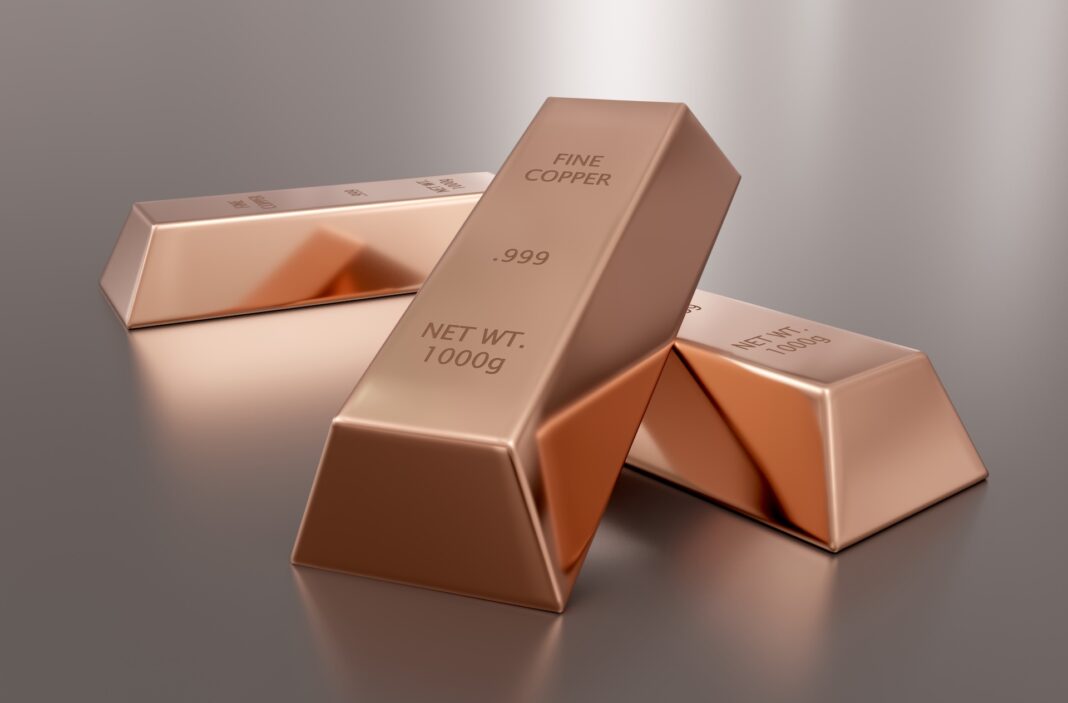
4. Can investors buy physical copper?
Physical ownership is another possible investment strategy, although it is significantly less convenient than purchasing gold or silver.
Investors can theoretically acquire copper bars, ingots or other forms of refined metal and store them privately.
The advantage is straightforward: the investor owns the commodity directly and does not face the operating risks of a mining business or the need to roll futures contracts.
Nevertheless, copper has several characteristics that make physical investment difficult.
Its relatively low value per unit of weight means a meaningful investment requires substantial quantities of metal. Transportation, warehousing, insurance and security can become expensive.
Additionally, private investors may encounter substantial differences between purchase and resale prices.
Copper is not commonly traded in the retail investment market in the same standardized way as precious-metal coins or bullion.
Another challenge is verifying the purity, quality and resale acceptability of the material.
Physical copper generates no dividends or interest, meaning investors generally depend on price appreciation to produce a positive return.
For most retail investors, purchasing and storing substantial amounts of physical copper is therefore less practical than investing through listed financial instruments.
5. Copper investment comparison: Which option offers the best exposure?
Each investment method has a different relationship with copper prices and a distinct risk profile.
| Investment method | Sensitivity to copper prices | Roll costs | Operating risk | Liquidity |
|---|---|---|---|---|
| Copper mining stocks | Potentially amplified, but indirect | None | High | Generally high for major listed companies |
| Copper mining ETFs | Indirect, potentially amplified | None | Diversified but still significant | Generally high for major ETFs |
| Copper futures | Direct, with potentially substantial financial leverage | Relevant when maintaining positions | None from owning mines | Generally high in active contracts |
| Futures-based copper funds | Relatively direct, but affected by futures performance | Yes, through futures strategy | Low direct mining exposure | Varies by fund |
| Physically backed copper funds | Relatively direct, subject to fees and premiums or discounts | No futures roll costs | No direct mining operating risk | Varies by product |
| Physical copper | Direct exposure to resale value | None | No mining operating risk, but storage and quality risks | Generally low for retail investors |
Note: Liquidity refers to the ability to buy or sell at a reasonable cost. Price sensitivity is not a guaranteed multiplier, and fund returns can differ from underlying copper prices.
The comparison highlights an important principle: greater exposure to copper prices does not necessarily produce better investment returns.
Mining companies may outperform during favorable commodity cycles but suffer from rising costs. Futures can provide direct market exposure but introduce leverage and rolling considerations.
Funds simplify access but introduce management fees and, depending on their structure, tracking differences.
Physical ownership avoids some financial-market risks but creates logistical expenses and resale challenges.
6. What should investors consider before buying copper?
Understanding the available investment instruments is only part of the process. Investors should also evaluate the underlying economic conditions driving the copper market.
Global industrial production remains an important indicator because copper consumption is closely connected to manufacturing and construction activity.
Chinese economic developments deserve particular attention, alongside global infrastructure spending and electricity network investment.
On the supply side, mining production, inventories, new projects and geopolitical developments can affect prices.
For mining stock investors, company-specific indicators are equally important. These include production guidance, unit operating costs, debt levels, capital expenditure and expected cash flow.
Someone investing in a futures-based fund should examine a different set of variables, particularly the futures curve, rolling methodology, total expenses and historical tracking differences.
Currency movements also matter. Copper is commonly quoted in US dollars, meaning investors using euros, Czech koruna or other currencies may experience additional gains or losses from foreign exchange movements.
Finally, investors should remember that copper remains a cyclical asset. Strong long-term demand expectations do not eliminate the possibility of prolonged price declines.
7. Is copper a good long-term investment?
Copper offers an investment narrative supported by several structural economic trends.
The expansion of electricity networks, electric vehicles, renewable energy and industrial electrification could sustain demand over the coming decades. Supply constraints may also create opportunities if mining development fails to keep pace.
Yet structural demand growth alone is insufficient to determine whether copper is attractively priced.
Commodity markets anticipate future developments, and optimistic expectations can already be reflected in current prices.
Mining stocks add another layer of complexity because their valuations depend on earnings, production costs and business-specific factors.
Futures-based investments face different challenges, including rolling effects and leverage.
Copper may therefore serve as a targeted allocation within a diversified investment portfolio rather than a substitute for broad exposure to equities, bonds or other asset classes.
Position sizing, investment horizon and risk tolerance are especially important because both copper prices and copper-related equities can experience substantial volatility.
How to invest in copper: Which strategy makes the most sense?
There is no single best method for investing in copper.
For investors comfortable analyzing businesses, copper mining stocks provide exposure to commodity prices alongside potential earnings growth and dividends.
Mining ETFs offer a more diversified approach, reducing dependence on any single producer while retaining exposure to the broader industry.
Futures-based funds may appeal to investors who want a closer relationship with copper commodity markets, although their performance can differ from spot prices because of futures-curve dynamics and expenses.
Direct futures trading is generally more appropriate for experienced market participants who understand margin requirements and the risks of leverage.
Meanwhile, physically backed investment vehicles may appeal to investors seeking exposure to copper inventories without personally managing storage and transportation.
Ultimately, understanding how to invest in copper means understanding what actually generates returns in each instrument.
A copper mine is a business, a futures contract is a derivative, a mining ETF is a portfolio of equities, and physical copper is a commodity. Although all four are connected to the same metal, they can behave very differently.
For investors, choosing the right exposure may prove just as important as correctly predicting the future direction of copper prices.