

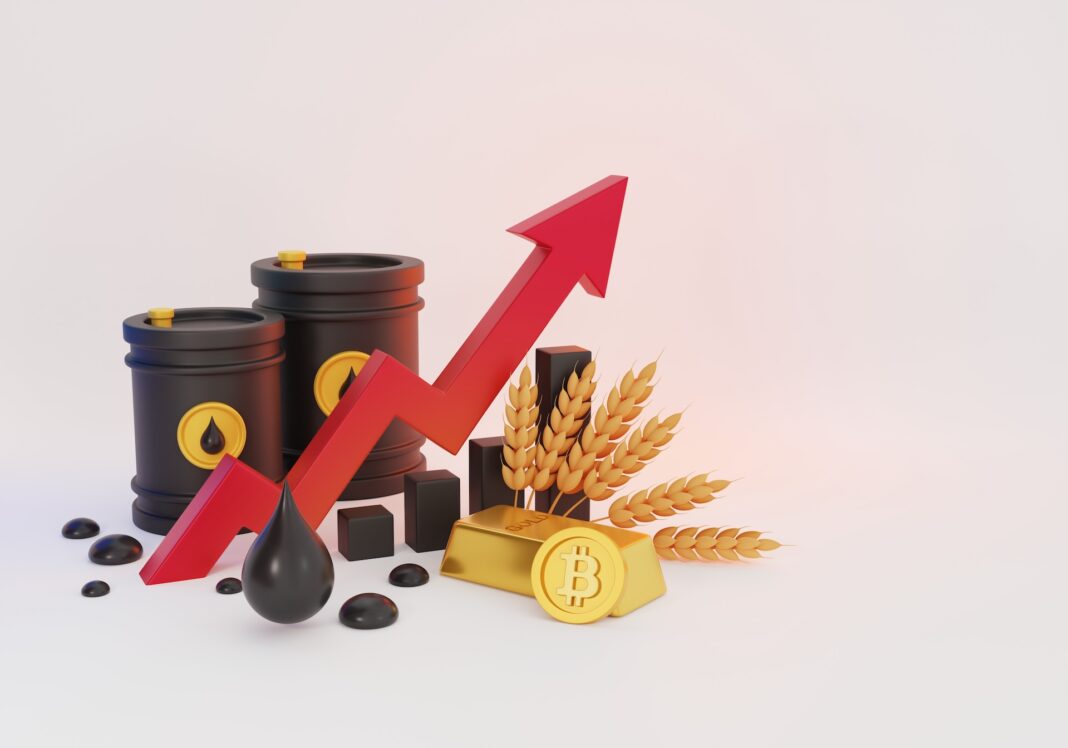
Oil, copper, wheat and coffee have something in common: they are physical goods whose prices can respond quickly to changes in supply, demand, weather and transport. The commodities market connects the businesses that produce and use these materials with traders and investors seeking to manage or take on price risk.
Unlike a stock market, it is not mainly about buying a claim on a company. Commodity trading can involve the physical goods themselves, contracts for future delivery or financial products linked to commodity prices. Understanding how these parts fit together helps explain why the market behaves differently from equities.
What is the commodities market?
The commodities market covers raw materials and agricultural products traded in local and global markets. It is commonly divided into three broad groups:
- Energy: crude oil, natural gas, heating oil and electricity.
- Metals: industrial metals such as copper and aluminium, as well as precious metals such as gold and silver.
- Agriculture: grains and oilseeds, including wheat, corn and soybeans, and soft commodities such as coffee, cocoa and sugar.
Prices can vary by location, quality and delivery date. A tonne of a particular metal in one warehouse may not be interchangeable with another tonne if it does not meet the contract’s required grade or delivery terms.
Spot markets: buying and selling now
A spot market is where a commodity is bought or sold for relatively prompt delivery. The spot price reflects the value of the product at a particular time and place, taking account of such factors as local supply, transport and storage.
A bakery buying flour, an airline purchasing fuel or a manufacturer sourcing copper may have exposure to spot prices even if it never trades on an exchange. These businesses can also agree prices directly with suppliers through bilateral contracts.
Spot markets are closely connected to the physical economy. A poor harvest can reduce available grain; a mine disruption can constrain metal supply; and a cold winter can increase demand for natural gas. The effects may show up in local prices before they are fully reflected in longer-term contracts.
Read also: How to Invest in Copper: Miners, Futures, Funds and Physical Exposure
Futures: agreeing a price for later
A futures contract is a standardised agreement to buy or sell a specified quantity and quality of a commodity at a stated price for a future month. Exchanges set the contract terms, including delivery dates, acceptable grades and delivery locations. Futures markets provide a way for businesses to manage the risk of price changes and for traders to take positions on where prices may go. The U.S. Commodity Futures Trading Commission explains that producers and consumers use futures to hedge, while the delivery mechanism helps link futures prices to cash-market prices as contracts approach expiration.
Many futures positions are closed or rolled before delivery. Some contracts are cash-settled, while others have physical delivery provisions. Either way, a futures price is not simply a prediction of the future spot price: storage, financing, insurance, seasonality and immediate supply conditions can all affect it.
For example, a wheat farmer worried that prices may fall before harvest could sell futures to help lock in a price. A food producer concerned that wheat may become more expensive could buy futures. The hedge does not remove every risk—the local price may differ from the futures benchmark, for instance—but it can make future costs or revenues more predictable.
Producers, consumers and financial participants
The commodities market brings together several groups with different reasons for trading:
- Producers, such as farmers, mining companies and oil producers, may sell futures to reduce the risk that prices will fall before they sell their output.
- Consumers and processors, including airlines, refineries and food manufacturers, may buy futures to protect against rising input costs.
- Merchants and intermediaries arrange storage, transport, processing and delivery, and may trade to manage the price risks involved in those activities.
- Financial participants, such as investment funds and trading firms, may seek returns, diversify a portfolio or provide liquidity. They generally do not need the physical commodity for their business.
These roles can overlap. A company may hedge one part of its exposure while taking a market view on another. Financial trading can help connect buyers and sellers, but it also exposes participants to potentially large losses, especially when futures are leveraged.
Contango and backwardation
The relationship between futures prices for different delivery months is called the forward curve. Two common shapes are contango and backwardation.
Contango means that a later-dated futures contract costs more than the spot price or a nearer-dated contract. Imagine a commodity trading at $100 a barrel for prompt delivery, while a contract for delivery in six months costs $105. Storage, insurance and financing costs can contribute to that premium. The CME Group’s explanation of contango and backwardation describes these carrying costs as factors that can influence physically delivered futures contracts.
Backwardation is the reverse: the near-term price is higher than the price for later delivery. If prompt oil costs $105 a barrel and a six-month contract costs $100, the curve is backwardated. This can occur when near-term supply is tight and buyers place a high value on having the commodity available now. In physical markets, that immediate availability can have what is known as a convenience yield.
The curve can change as inventories, production, demand and expectations shift. Neither shape guarantees that prices will rise or fall. But it matters to investors using futures: a fund that holds exposure by replacing expiring contracts with later ones may gain or lose from the price difference between contracts. This effect, often called roll yield, can make its return differ from the change in the spot price.
Read also: Qualified Purchaser Explained: Who Qualifies and Why the Status Matters
Commodity exposure is different from owning a company
Buying a barrel of oil, a futures contract or a fund linked to oil prices is not the same as buying shares in an oil producer. A company’s share price can reflect commodity prices, but also its costs, debt, management, taxes, production levels and decisions about how to return money to shareholders.
A miner might benefit from a higher copper price, but rising energy costs or operational problems could offset that advantage. Meanwhile, the copper price itself may rise because of a supply shortage even if a particular mining company is struggling. The commodity and the company are linked, but they are not interchangeable investments.
Investors can gain commodity exposure in several ways, including futures-based funds, exchange-traded products, shares in producers or, in some cases, physical holdings. Each approach has different risks and costs. Futures-based products may be affected by the shape of the forward curve and the need to roll contracts; producer shares add company-specific risks; and physical ownership can involve storage, insurance and transaction expenses.
The commodities market is ultimately shaped by the movement of real goods as well as the contracts and financial products built around them. For investors, the key question is not only which commodity they want exposure to, but also how that exposure is created—and what costs, risks and price relationships come with it.