


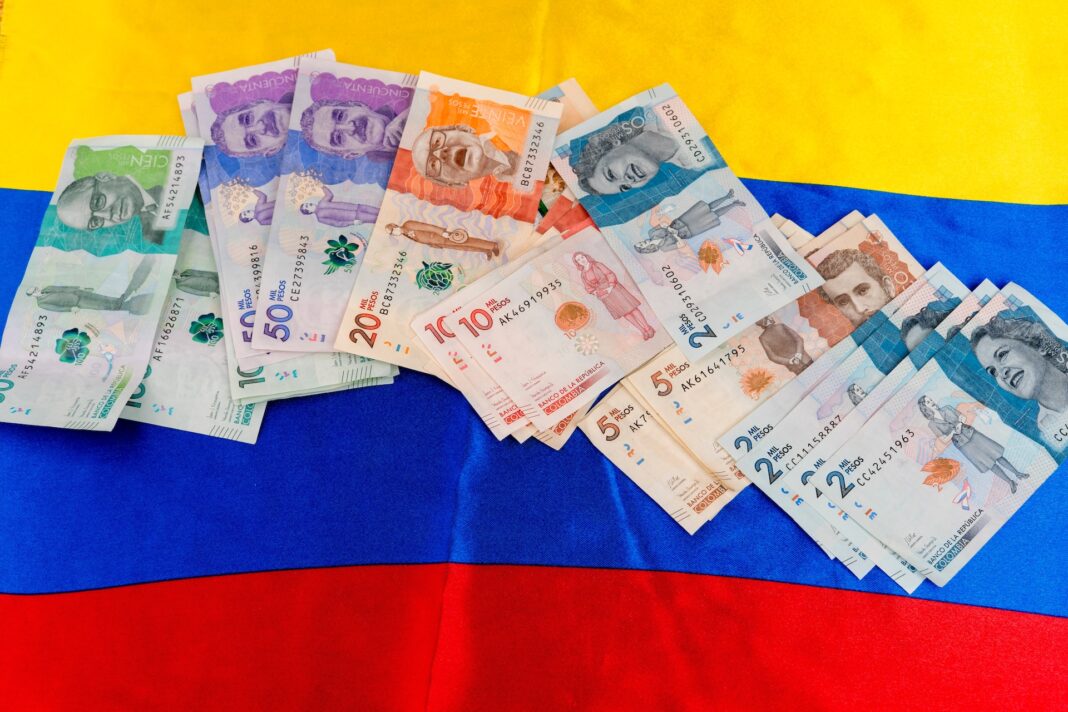
Latin America can offer investors access to growing consumer markets, natural resources, infrastructure projects and comparatively attractive bond yields. Colombia is one of the countries frequently considered by international investors looking beyond developed markets. However, the performance of a Colombian investment cannot be evaluated solely by looking at the price of a stock, bond or property in Colombian pesos.
For an investor whose portfolio is measured in US dollars, movements in the usd to colombian peso exchange rate can amplify local gains, reduce them or even turn a profitable investment into a loss.
This currency effect is particularly important in Colombia because the peso operates under a flexible exchange-rate regime. The International Monetary Fund considers exchange-rate flexibility an important shock absorber for the Colombian economy, but it also means that foreign investors must accept potentially significant fluctuations in the value of their holdings when converted back into dollars.
What does the USD to Colombian peso exchange rate show?
The USD/COP exchange rate states how many Colombian pesos are required to buy one US dollar. For example, an exchange rate of 4,000 means that USD 1 is worth COP 4,000.
When the rate falls from 4,000 to 3,600, the Colombian peso has strengthened against the dollar. When the rate rises from 4,000 to 4,400, the peso has weakened.
This distinction matters because a dollar-based investor must normally convert dollars into pesos when entering a Colombian investment and convert the proceeds back into dollars when selling it.
The official representative market rate, known locally as the TRM, is published by Banco de la República, Colombia’s central bank. Its historical exchange-rate data illustrate how widely the peso can move over longer periods.
Such a broad historical range does not mean that investors should expect extreme movements every year. It does show, however, that currency exposure can become one of the most important components of long-term returns.
Read also: What Is Volatility and Why It Drives Returns
How currency movements affect investment returns
A Colombian asset can generate a positive return in pesos while producing a much weaker result in dollars.
For a dollar-based investor, the approximate total return can be calculated as:
USD return = [(1 + local asset return) × (entry USD/COP rate ÷ exit USD/COP rate)] − 1
Consider an investor who converts USD 10,000 into Colombian pesos at an exchange rate of COP 4,000 per dollar. The investor receives COP 40 million and invests the money in a Colombian asset.
Over the following year, the asset rises by 12% in local currency, increasing its value to COP 44.8 million.
| Currency scenario | Exit exchange rate | Final value in USD | Total USD return |
| Peso strengthens | COP 3,600 per USD | USD 12,444 | 24.4% |
| Exchange rate unchanged | COP 4,000 per USD | USD 11,200 | 12.0% |
| Peso weakens moderately | COP 4,400 per USD | USD 10,182 | 1.8% |
| Peso weakens sharply | COP 5,000 per USD | USD 8,960 | -10.4% |
The underlying asset produced the same 12% local return in every scenario. The investor’s result in dollars, however, ranged from a gain of more than 24% to a loss of over 10%.
This is why the usd to colombian peso exchange rate should not be treated as a secondary detail. It is an integral part of the investment itself.
A stronger Colombian peso can boost dollar returns
A stronger peso benefits foreign investors when they convert Colombian assets, rental income, bond coupons or dividends back into dollars.
Suppose a Colombian stock rises by 10%, while the peso strengthens by another 8% against the dollar. The combined dollar return will be higher than either percentage viewed separately because the investor benefits from both the asset appreciation and the more favourable conversion rate.
Peso appreciation can therefore make Colombian investments particularly attractive during periods of improving domestic confidence, stronger commodity prices, falling risk premiums or increased foreign capital inflows.
However, currency appreciation can also create challenges for Colombian exporters. Companies earning revenue in dollars but paying wages and other expenses in pesos may see the local-currency value of their foreign sales decline. Investors must therefore distinguish between the currency effect on their own portfolio and its effect on the underlying company’s operations.
Peso depreciation can erase local profits
The opposite occurs when the Colombian peso weakens. A rising USD/COP rate means that each peso is worth fewer dollars.
A Colombian bond could deliver a high coupon, or a local stock index could rise, while a dollar-based investor still earns little or loses money after currency conversion. The larger the depreciation, the higher the local return required merely to break even in dollars.
For example, if a Colombian investment gains 15% but the peso loses approximately 20% against the dollar, the investor will generally record a negative dollar return.
Peso depreciation may nevertheless benefit some Colombian businesses. Exporters that receive dollars while paying many of their costs in pesos can experience stronger local-currency revenues. Companies with substantial dollar-denominated debt, imported inputs or foreign equipment costs may face the opposite effect.
Colombian bonds: high yields do not eliminate currency risk
Colombian government and corporate bonds can attract investors because their nominal yields are often higher than yields available in developed markets. But a high coupon in pesos is not equivalent to a guaranteed high return in dollars.
Information about Colombia’s current policy rate, inflation developments and monetary-policy decisions is regularly published by Banco de la República. Relatively high interest rates may reflect domestic inflation conditions and the central bank’s attempt to maintain price stability; they should not automatically be interpreted as a risk-free opportunity for foreign investors.
An investor earning 10% on a peso-denominated bond could still lose money in dollar terms if the peso depreciates by more than the bond’s interest income. Longer-dated bonds can also be affected by changes in Colombian interest rates, inflation expectations and sovereign risk premiums.
Currency risk is therefore only one part of the calculation. Investors must also consider credit risk, duration risk, inflation and the possibility that local interest rates remain higher for longer than expected.
The impact on Colombian equities
Currency movements affect Colombian equities in two separate ways.
First, the usd to colombian peso exchange rate influences the dollar value of the investor’s shares. Even when a stock price remains unchanged in pesos, a stronger peso increases its dollar value, while a weaker peso reduces it.
Second, the exchange rate can affect the company’s revenue, expenses, debt and profit margins.
Export-oriented companies may benefit from a weaker peso because dollar revenues translate into more local currency. Import-dependent retailers, manufacturers and infrastructure businesses can face higher costs when imported equipment, fuel or materials become more expensive.
Banks and domestic consumer companies are often affected more indirectly. Sharp depreciation can contribute to inflation, influence central-bank policy and reduce households’ purchasing power. These broader economic effects may eventually affect loan growth, credit quality and consumer spending.
Investors should therefore examine not only where a company is listed, but also where it generates revenue, which currency its debts are denominated in and whether it uses financial hedges.
Real estate and direct investment face the same exposure
Foreign investors purchasing Colombian property or directly financing a local business also take on currency risk.
Rental income, operating profits and the eventual sale price will usually be denominated in pesos. A property may appreciate substantially in the local market, but the investor’s dollar return will depend on the exchange rate at the time the money is repatriated.
Real estate investors may face an additional complication: unlike listed securities, property cannot normally be sold immediately when the exchange rate becomes unfavourable. Transaction costs, taxes, legal procedures and limited liquidity can make currency timing more difficult.
Long-term investors should therefore run several exchange-rate scenarios before calculating expected returns. A business plan based only on an unchanged USD/COP rate may significantly underestimate risk.
Read also: Top six countries by USD forex reserves hold more dollars than 187 countries combined
What drives volatility in the USD to Colombian peso?
The Colombian peso is influenced by both domestic conditions and global financial markets. No single factor determines the exchange rate, and the importance of individual drivers changes over time.
Oil and other commodity prices
Colombia remains exposed to commodities including oil, coal and coffee. Changes in export prices influence dollar revenues, trade flows, tax receipts and investor perceptions of the country.
Research published by Banco de la República found that positive oil-price shocks have historically tended to support Colombian economic activity, reduce perceived risk and contribute to peso appreciation. Falling oil prices can create the opposite pressure.
A Banco de la República financial markets report also linked periods of peso depreciation and higher volatility to a combination of fiscal uncertainty and falling oil prices.
Interest rates and inflation
Higher Colombian interest rates can attract international investors searching for yield, particularly when the difference between US and Colombian interest rates widens.
However, high rates may also signal persistent inflation or economic imbalances. If investors believe that inflation will remain elevated, the peso can weaken despite attractive nominal yields.
Expectations are often more important than the current rate itself. A surprise increase, delayed reduction or change in the expected direction of monetary policy can quickly affect the usd to colombian peso exchange rate.
Fiscal policy and sovereign risk
Government deficits, public debt and confidence in fiscal policy can influence the risk premium investors demand for holding Colombian assets.
In its assessment of the Colombian economy, the International Monetary Fund warned that wider fiscal deficits and rising debt could contribute to elevated sovereign spreads. Commodity prices, exchange-rate movements and interest-rate differentials were also identified as important medium-term risks.
When investors become less confident about public finances, they may reduce exposure to local bonds and other Colombian assets. The resulting capital outflows can place additional pressure on the peso.
Global risk appetite and the US dollar
The peso is also affected by forces outside Colombia. During periods of market stress, investors often reduce positions in emerging-market currencies and move towards dollar-denominated assets.
Higher US interest rates can make dollar assets more attractive, increasing the opportunity cost of holding Colombian pesos. Conversely, expectations of lower US rates or improving global risk appetite can support emerging-market currencies.
This means that the peso may weaken even when Colombian companies or economic indicators remain relatively stable.
Current-account balances and foreign capital flows
Colombia imports goods, services and capital equipment while also receiving income from commodity exports, tourism, remittances and foreign investment.
According to the International Monetary Fund’s analysis of Colombia, the country’s external balance is influenced by terms of trade, domestic demand and access to international financing.
When foreign direct investment and portfolio inflows comfortably cover the current-account deficit, pressure on the peso may remain limited. When capital inflows slow, the exchange rate can adjust rapidly.
Should investors hedge Colombian peso exposure?
Currency hedging can reduce the impact of changes in the usd to colombian peso rate, but it also introduces costs and additional complexity.
Professional investors may use forward contracts, non-deliverable forwards, swaps or options. Some investment funds also offer currency-hedged share classes, although availability for Colombian exposure may be more limited than for major developed-market currencies.
An International Monetary Fund review of Colombia’s foreign-exchange market noted that Colombian corporations commonly use forward contracts and natural hedges to manage exchange-rate exposure.
A natural hedge occurs when a company or investor has both income and expenses in the same currency. For example, an investor receiving peso income to cover future expenses in Colombia may have less reason to convert all proceeds into dollars.
Hedging is not automatically the best solution. The cost of a hedge can reduce returns, particularly when interest-rate differences between the two currencies are large. A hedge may also remove potential gains from peso appreciation.
The decision should depend on the investor’s time horizon, risk tolerance, base currency and reason for holding the Colombian asset.
How investors can manage USD/COP risk
The first step is to separate the expected local return from the expected currency return. A forecast that a Colombian stock will rise by 15% is incomplete unless the investor also considers what may happen to the peso.
Investors should model several scenarios rather than rely on one exchange-rate forecast. These should include moderate appreciation, an unchanged rate, gradual depreciation and a severe stress scenario.
Entry timing can also be diversified. Converting an entire investment into pesos on one day creates exposure to a single exchange rate. Staggering purchases over several weeks or months can reduce timing risk, although it cannot eliminate long-term currency movements.
Portfolio diversification is equally important. Colombian assets should generally form part of a broader strategy rather than represent the investor’s entire emerging-market allocation.
Finally, investors should determine whether their future liabilities are denominated in dollars, pesos or another currency. The appropriate hedge for an investor planning to spend money in Colombia may be very different from that of an investor whose expenses remain entirely in the United States.
Is Colombian peso volatility a risk or an opportunity?
It can be both.
Investors who correctly identify a period of peso appreciation may earn substantially more than the local return on their assets. Those who ignore the currency can discover that strong performance in pesos produces disappointing results in dollars.
Currency movements can also create more attractive entry valuations. A sharply weaker peso allows dollar investors to purchase Colombian assets with fewer dollars, although depreciation may reflect genuine economic or political risks that should not be dismissed.
The essential principle is that foreign-exchange exposure should be analysed deliberately. The usd to colombian peso rate is not merely the final step in converting profits. It is one of the main variables determining whether an investment succeeds.