


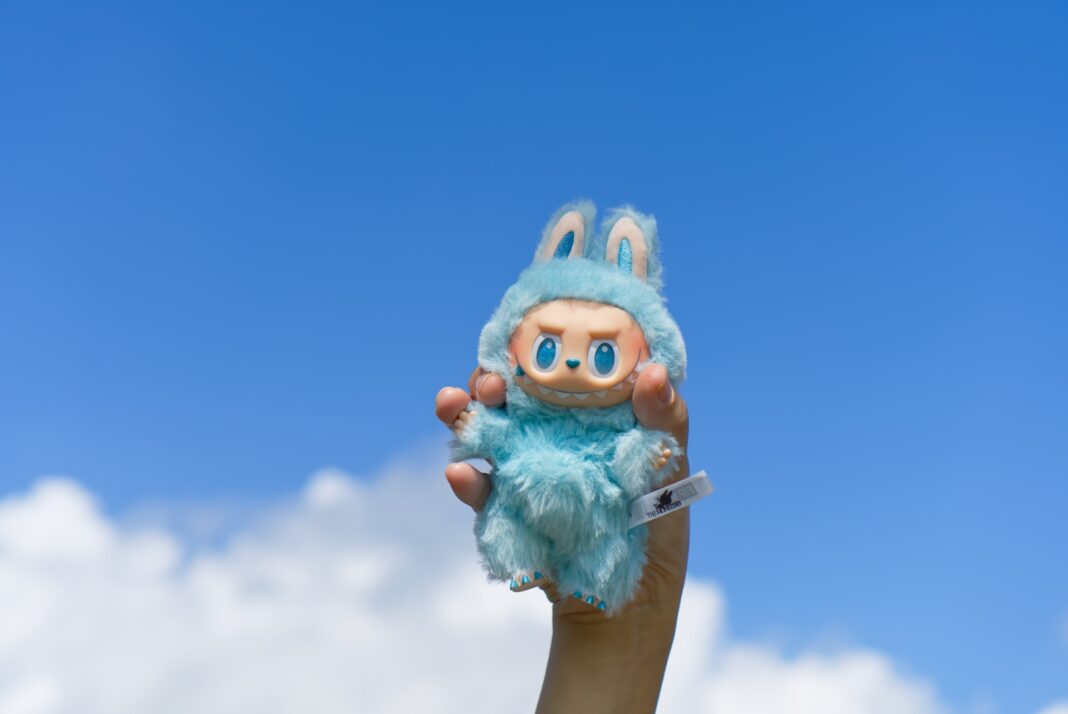
For decades, toys were treated as a seasonal consumer category. Parents bought them for children, retailers fought for Christmas sales, and investors mostly looked elsewhere for growth stories. But the rise of the viral popmart labubu craze, together with the comeback of Japan’s Monchhichi dolls, has changed that perception. Collectible toys are no longer just playthings. They have become fashion accessories, social media status symbols, emotional purchases and, in some cases, speculative assets.
The result is a market story that looks surprisingly similar to luxury fashion, sneakers, trading cards and even crypto: limited supply, strong intellectual property, community-driven demand and a secondary market where prices can move far faster than traditional assets.
From children’s toys to adult collectibles
The strongest trend behind the popmart labubu phenomenon is not simply that one plush toy went viral. It is the rise of the adult toy buyer. Around the world, “kidults” are spending money on collectibles, figurines, plush toys and nostalgic characters not because they need them, but because they want objects that express identity, taste and emotional comfort.
This shift has helped toy companies offset pressure from declining birth rates. In France, for example, toy sales to people over 12 rose sharply in 2025 and represented more than a third of the market, according to Le Monde. That matters for investors because adult buyers behave differently from parents shopping for children: they often collect repeatedly, follow limited drops, engage with brands online and are willing to pay a premium for rarity.
Read also: Dividend Kings 2026: 5 Stocks Leading the Market
Why popmart labubu became an investment story
Pop Mart, the Chinese company behind Labubu, turned the blind-box model into a global consumer machine. Labubu belongs to The Monsters franchise, one of Pop Mart’s key intellectual properties. In 2025, Pop Mart reported revenue of 37.12 billion yuan, up 185% year on year, while profit attributable to shareholders rose sharply, according to Reuters.
The numbers behind Labubu were even more striking. The company’s 2025 annual results show that The Monsters generated 14.16 billion yuan in revenue in 2025, making it one of Pop Mart’s most important IP franchises. That figure was also reported by China Daily, which noted that the franchise represented roughly 38% of Pop Mart’s total revenue.
That is why popmart labubu became more than a TikTok trend. It became a listed-company growth story. When a toy becomes a cultural object, the upside can be far larger than the retail price of the product itself. The real value sits in intellectual property, scarcity, licensing, global distribution and the ability to turn one character into an ecosystem.
The blind-box economy: scarcity as a business model
The success of Labubu is closely tied to the blind-box format. Customers do not always know which version they are buying, which creates a lottery-like experience. That uncertainty encourages repeat purchases, trading and resale. It also makes each product drop feel like an event.
This is where collectible toys start to resemble financial markets. Demand is not based only on utility. It is based on narrative, rarity and perceived future value. A limited-edition Labubu can trade at a significant premium on resale platforms if collectors believe it will remain desirable.
But the same mechanism also creates risk. Reuters reported in 2025 that Labubu resale prices had fallen after Pop Mart increased plush toy supply, while analysts warned that secondary-market prices are not always a reliable measure of real consumer demand.
In other words, viral collectibles can beat the market on the way up, but they can also correct like speculative assets when supply expands or hype weakens.
Monchhichi proves nostalgia can be monetised
The Labubu boom has also revived interest in older plush characters. Monchhichi, the Japanese monkey-like doll created by Sekiguchi in 1974, has become a useful comparison. Unlike Labubu, Monchhichi is not a new viral invention. It is a nostalgic brand from the 1970s and 1980s that has found new relevance among younger consumers and collectors.
The Straits Times reported that Monchhichi sales more than doubled in the year ending February 2025 to 4.6 billion yen. The same report noted that the brand’s current comeback is taking place alongside the wider Labubu-driven collectible plush craze.
This makes Monchhichi important from an investment perspective. It shows that collectible toy demand is not only about new characters. It can also revive legacy brands if nostalgia, fashion and social media align. In that sense, Monchhichi is closer to vintage sneakers or retro gaming: the value comes from cultural memory as much as product design.
Why toys can outperform traditional consumer stocks
The appeal of toy investing is that a successful character can scale across multiple revenue streams. A plush toy is only the first layer. The same intellectual property can later appear in apparel, accessories, animation, games, theme parks, collaborations and licensing deals.
Pop Mart is already trying to move in that direction. Reuters reported in 2026 that the company has been expanding its entertainment and cultural credentials, including a Labubu movie project and the extension of its Pop Land theme park in Beijing.
This is why investors compare companies like Pop Mart less to traditional toy sellers and more to entertainment IP companies. A strong character can generate recurring revenue for years. Disney, Sanrio and Pokémon have shown how valuable this model can become when characters become part of everyday culture.
The difference is that Pop Mart’s growth has been much faster — and therefore much riskier.
Read also: Portfolio Diversification: How to Reduce Risk
The risk: one viral character is not a diversified portfolio
The biggest concern around Pop Mart is concentration. A large part of the company’s recent success has depended on Labubu and The Monsters. The company’s own 2025 annual results show how large this franchise has become inside the group’s revenue mix, while China Daily also noted analyst concerns about reliance on a single blockbuster IP.
That is a familiar risk in consumer investing. A single hit product can create spectacular growth, but it can also make future expectations harder to meet. Once a company is priced as a cultural phenomenon, good results may no longer be enough. Investors want proof that the next character, the next market and the next product category can also deliver.
There are also practical risks. The more valuable a collectible becomes, the more attractive it is to counterfeiters. In late 2025, the UK government warned that fake Labubu-style toys made up 90% of more than 260,000 counterfeit toys stopped by Border Force, and said some dangerous imitations failed safety standards, according to GOV.UK.
Counterfeits can damage brand trust, hurt resale markets and create safety concerns, especially when collectible toys are bought for children rather than adult display.
Investing in the toy itself vs investing in the company
For ordinary investors, there are two very different ways to look at this trend. The first is buying collectible toys directly. The second is investing in companies that own the intellectual property.
Buying a rare Labubu or Monchhichi can deliver large percentage gains if demand rises and supply remains limited. But this is a highly illiquid market. Prices depend on authenticity, condition, rarity, platform fees and whether the trend remains culturally relevant. Unlike listed stocks, plush toys do not publish earnings, pay dividends or provide transparent market data.
Investing in a company such as Pop Mart is more transparent, but it brings equity-market risk. The stock can rise when revenue accelerates, but it can also fall when investors worry about slower growth, margin pressure or overreliance on one IP. Reuters reported that Pop Mart shares fell more than 20% after its 2025 results, despite strong revenue and profit growth, as investors focused on future expectations.
That contrast is the key lesson of the popmart labubu story. Viral demand can create extraordinary returns, but the market quickly shifts from asking “is this popular?” to “can this keep growing?”
What investors should watch next
The collectible toy boom is unlikely to disappear overnight. The bigger question is which brands can turn short-term virality into long-term intellectual property. Pop Mart needs to prove that Labubu is not a one-character bubble. Sekiguchi needs to show that Monchhichi’s comeback can extend beyond nostalgia. And the wider toy industry needs to understand that adult collectors are now a serious consumer segment, not a side audience.
For investors, the most important signals will be repeat demand, international growth, resale stability, counterfeit control and the ability to build new characters or revive old ones. In this market, culture moves first and financial statements follow later.
The viral popmart labubu and Monchhichi phenomenon shows that toys can beat the market when they stop being toys and become identity assets. But it also shows that hype is not a moat. The winners will be the companies that can turn emotional consumption into durable brands.