

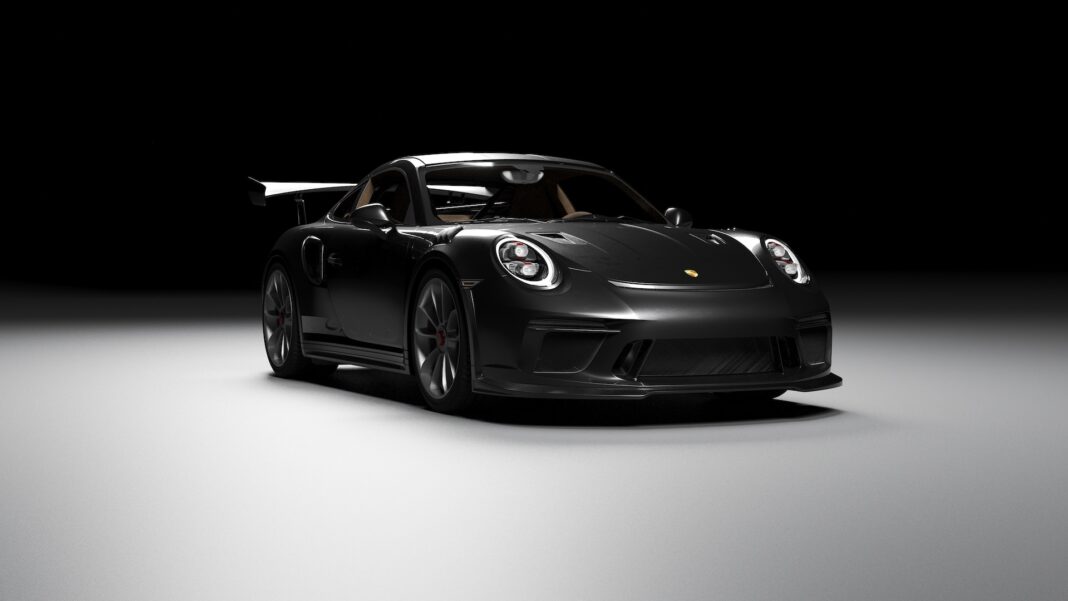
The 2025 Porsche 911 marks one of the most controversial turning points in the history of Germany’s best-known sports car. For the first time, a road-legal production 911 is available with a hybrid powertrain. The Carrera GTS T-Hybrid combines a newly developed flat-six engine with an electric turbocharger, a motor integrated into the transmission and a compact high-voltage battery.
For some enthusiasts, this is simply the latest step in the 911’s continuous evolution. For others, it represents a deeper problem: as iconic cars become increasingly dependent on software, batteries and proprietary electronic components, will they still be desirable – and repairable – several decades from now?
Why the 2025 Porsche 911 Hybrid Is Different
The hybrid system used in the Carrera GTS is not designed primarily to reduce fuel consumption or provide electric-only driving. Unlike a conventional plug-in hybrid, the car does not need to be connected to a charger and cannot travel through a city silently on battery power.
Instead, Porsche developed the T-Hybrid system as a performance tool. According to the company’s detailed technical description of the Carrera GTS drivetrain, a compact 1.9-kWh, 400-volt battery supplies an electric motor incorporated into the eight-speed PDK transmission and another motor positioned inside the turbocharger.
The electric turbocharger can build boost almost immediately, independently of engine speed. The transmission-mounted motor provides additional power while also recovering energy under braking and during periods of excess exhaust-gas flow.
The result is a combined output of 532 horsepower and 449 pound-feet of torque in the US specification. Porsche originally claimed that the rear-wheel-drive Carrera GTS Coupe could accelerate from zero to 60 mph in 2.9 seconds and reach a top speed of 194 mph. Full specifications were published when Porsche introduced the 2025 model-year 911.
Although electrification usually adds substantial mass, Porsche says the T-Hybrid system increases the car’s weight by only around 50 kilograms, or approximately 110 pounds, compared with its predecessor. The manufacturer kept the increase relatively small by using a compact battery, a single electrically assisted turbocharger and a newly designed 3.6-liter engine.
Independent testing suggests that the technology delivers more than impressive figures on paper. In its test of the 2025 Porsche 911 Carrera GTS, Car and Driver recorded a zero-to-60-mph time of just 2.5 seconds and a quarter-mile time of 10.6 seconds. The publication also found no perceptible turbo lag during hard acceleration.
Read also: Porsche is set to eliminate another 4,000 jobs!
Is the 2025 Porsche 911 Becoming a Computer on Wheels?
The hybrid drivetrain is only one part of the technological transformation. The updated 911, known internally as the 992.2 generation, is also the first road-going 911 to use a fully digital instrument cluster.
Its 12.6-inch curved display replaces the partly analogue arrangement used by previous generations. Deeper smartphone integration, connected services and native applications bring the cabin closer to the digital architecture of other modern luxury cars.
That development creates an unusual tension. The 911 remains visually and mechanically connected to a design introduced in the 1960s, but the systems controlling its performance are now far more complex than those found in an air-cooled classic.
The T-Hybrid relies on a high-voltage battery, power electronics, an electrically driven turbocharger, an integrated transmission motor and software that coordinates combustion, energy recovery and electric assistance. If one of these components fails in 2045 or 2055, repairing the car may require more than a skilled mechanic and a workshop manual.
Collectors already face this problem with modern classics. Failed control units, digital displays and discontinued electronic modules can make otherwise sound vehicles difficult or economically irrational to restore. Hagerty has examined whether failed electronics can effectively become a death sentence for modern collectible cars, although specialist companies are increasingly learning to rebuild components that manufacturers no longer supply.
The problem may become more serious as cars rely increasingly on encrypted software and communication between proprietary electronic modules. Another Hagerty analysis of software-dependent vehicles warned that some modern cars could eventually become difficult to repair even when their fundamental mechanical components remain usable.
Why Advanced Technology May Help Its Collectible Value
Complexity does not automatically destroy collectible value. In some cases, it creates historical importance.
The 2025 Porsche 911 Carrera GTS is the first hybrid production model in the 911 lineage. That distinction cannot be repeated. Even if future Carrera, Turbo and GT models adopt more powerful versions of the technology, the 2025 Carrera GTS will remain the model that introduced electrification to Porsche’s most famous sports car.
Collectors frequently value vehicles that represent the beginning or end of an era. The first turbocharged 911 models, the final air-cooled cars and limited-production performance variants are desirable partly because they mark decisive moments in Porsche’s development.
The T-Hybrid could eventually be viewed in a similar way: not as the 911 that abandoned tradition, but as the model that helped preserve the combustion-powered 911 in an automotive industry facing stricter emissions rules.
Its reputation may also benefit from the fact that Porsche did not use hybridization merely as an environmental marketing exercise. The system improves throttle response, acceleration and track performance while preserving the rear-mounted flat-six engine that remains central to the identity of the 911.
In 2025, the Carrera GTS was officially named World Performance Car by the World Car Awards, finishing ahead of the BMW M5 and Porsche Taycan Turbo in the final voting. The award gave the new drivetrain early recognition beyond Porsche’s own marketing claims.
That matters because collectible cars are not valued only for their simplicity. They are also valued for historical significance, engineering, design, performance, cultural relevance and the emotions attached to them.
A technologically ambitious car can become highly collectible when it captures a major transition in automotive history. The hybrid Carrera GTS may ultimately become a symbol of the moment when electrification stopped being limited to economy cars and became an essential performance technology.
Read also: Deloitte Layoffs and the End of the Consulting Boom: What It Means for the Global Economy
Why Purists May Still Prefer Older 911 Models
The strongest argument against the future value of the hybrid GTS is not that it lacks performance. It is that the vehicle removes some of the characteristics traditionally associated with collectible sports cars.
The T-Hybrid is available only with Porsche’s eight-speed PDK dual-clutch transmission. Buyers seeking a manual gearbox must look elsewhere in the 911 range. The analogue central tachometer has become a digital representation, while the traditional ignition-style rotary control has been replaced by a start button.
As Car and Driver noted in its review of the hybrid Carrera GTS, these changes may be particularly difficult for Porsche traditionalists to accept.
Such details may appear minor, but collector preferences often focus on precisely these distinctions. Cars with manual transmissions, naturally aspirated engines, hydraulic steering and analogue instruments frequently become more desirable after manufacturers discontinue those features.
The hybrid GTS is also unlikely to be exceptionally rare simply because it is technologically important. Porsche did not introduce it as a strictly limited-edition model. If the company produces large numbers, supply could reduce its potential for rapid appreciation, especially compared with models such as the GT3 RS, GT2 RS, Sport Classic or other low-volume variants.
Moreover, the cost of maintaining the hybrid system after the original warranty expires remains uncertain. A 1.9-kWh battery is much smaller than the battery used in a plug-in hybrid or fully electric vehicle, but long-term ownership may still require specialized diagnostics, high-voltage expertise and access to factory-compatible software.
The Battery May Not Be the Biggest Problem
When discussing the future of hybrid and electric collectibles, attention usually focuses on battery degradation. Yet the battery itself may not be the most serious obstacle facing a future owner of the 2025 Porsche 911.
Battery cells can potentially be replaced, refurbished or recreated. The greater challenge may involve the network of control units that allows the battery, transmission, engine and electric turbocharger to communicate.
A replacement component may be mechanically compatible but still require software authorization, coding or access to manufacturer servers. If these digital services are discontinued, an otherwise repairable car could become difficult to return to full working order.
This means preservation will increasingly depend on access to software as well as physical spare parts. Collectors may need archived diagnostic programs, wiring diagrams, firmware files and compatible computer hardware.
For manufacturers such as Porsche, supporting future classics may therefore require maintaining a digital parts archive alongside the traditional supply of engines, body panels and suspension components.
What Will Determine the Future Value of the 2025 Porsche 911?
The market is unlikely to treat every hybrid Carrera GTS equally. Originality, condition, mileage, specification, color combination and service documentation will remain critical.
Cars with complete digital and physical maintenance records may become especially attractive because buyers will want proof that the battery, cooling system, electric turbocharger and software were maintained correctly.
Unmodified examples are also likely to be favored over vehicles with questionable engine tuning or unauthorized changes to the hybrid control system. Software modifications could become the modern equivalent of poorly executed mechanical tuning, particularly if they place additional stress on the battery or electric motor.
Desirable factory options could strengthen demand, but expensive equipment does not necessarily guarantee a higher return. Future collectors may prefer specifications that emphasize the car’s sporting identity, such as a rear-wheel-drive Coupe with lightweight seats.
On the other hand, rarity within the production mix could make an unusual Cabriolet or Targa configuration valuable for different reasons.
Most importantly, Porsche’s long-term support will influence whether the T-Hybrid becomes a usable classic or a static museum object. Continued access to replacement batteries, electronic modules, diagnostic systems and software will be as important as access to conventional engine parts.
Will Computers Ruin the Collectible Porsche 911?
Probably not, but they will change the meaning of preservation.
The 2025 Porsche 911 may never offer the mechanical simplicity of an early air-cooled Carrera. Owners will not be able to maintain every system with conventional tools, and future restorers may need to understand electronics, software and high-voltage technology as well as engines, gearboxes and suspension.
Yet the same complexity that worries traditionalists also gives the car historical significance. The Carrera GTS T-Hybrid represents a bridge between the analogue sports-car era and a future in which combustion engines increasingly depend on electrification to remain competitive.
Its ultimate value will not be determined by the presence of a battery alone. It will depend on whether enthusiasts continue to regard it as an authentic 91, and whether Porsche ensures that its advanced systems remain repairable decades from now.
The computer era is therefore unlikely to destroy the collectible value of iconic cars. It will simply make their survival dependent on a new kind of specialist: part mechanic, part electrical engineer and part digital archivist.