
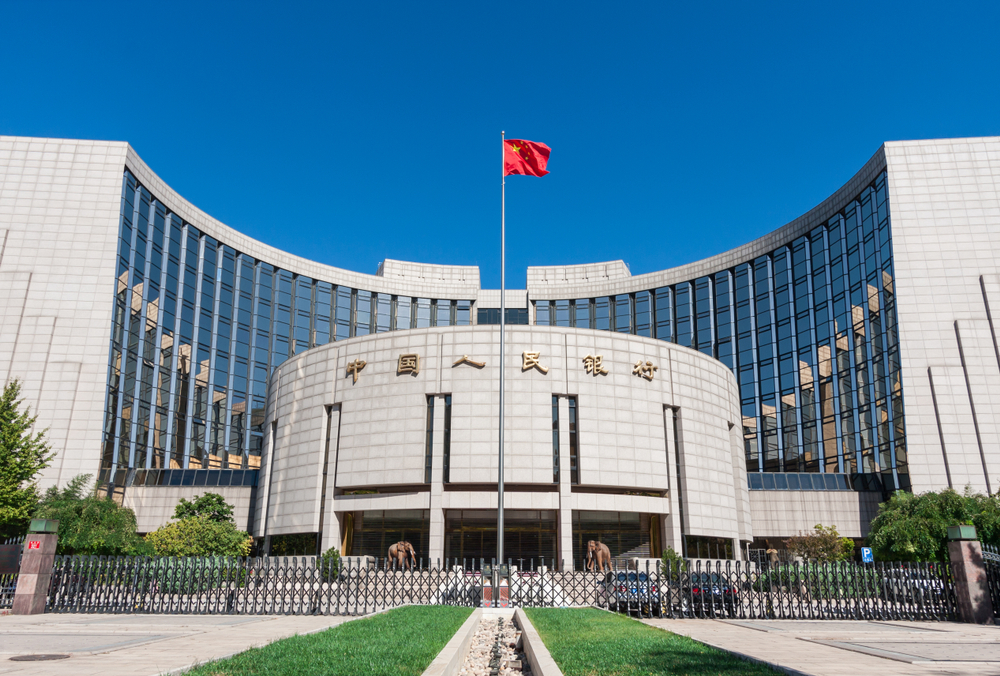
China cuts banks’ reserve requirements, seeks to boost economy

China’s central bank has decided to cut the reserve requirement ratio, the amount of cash commercial banks are required to hold. Central bank Governor Pang Kunsheng said the reserve requirement ratio would be cut by half a percentage point from February 5, releasing about one trillion yuan into the economy. It is the most significant reduction in reserve requirements since the end of 2021, Reuters reported today.

Revival

The Chinese economy’s recovery from the downturn caused by severe coronary restrictions is still hampered by the property market crisis, as well as local government debt problems and weak global demand. This in turn has negative implications for investor interest in Chinese assets.

“The downgrade is a sign that China’s central bank will continue its easy approach to monetary policy this year,” said Xu Tianchen, an analyst at the Economist Intelligence Unit. “It’s also a sign that policymakers in the government want to give the economy a good start with increased support. This is needed to achieve their ambitious growth target in this difficult year,” he added.

Stock Exchange

Hong Kong’s main stock market index gained 3.6 percent today thanks to the central bank’s decision. It recorded its strongest rise in more than two months. Stock markets in mainland China closed today’s trading ahead of the central bank’s announcement.

Last year, China’s stock market fell about 13 percent and continued to decline at the start of this year. In fact, foreign investors continued to sell Chinese stocks.

Analysts say further measures will be needed this year to support China’s economy, which is the world’s second largest after the United States. Economists forecast economic growth in China will slow to 4.6 percent this year from 5.2 percent last year, according to a Reuters poll.

Source: ČTK

author avatar
EditorialTeam
The Trader-Magazine.com EditorialTeam is a collective of certified financial analysts, active traders, and cryptocurrency experts. Our mission is to transform complex market data (forex, equities, indices) into accessible financial education. All content undergoes rigorous, multi-level fact-checking to ensure we deliver only accurate, objective information for your trading and investment decisions.

Top 10 financial instruments for 2022. What will their prospects be in 2023?

The year 2022 has brought countless surprises and obstacles...

Telegram scams: how they work and how to protect yourself

Telegram has become one of the most widely used...

Trump Saved TikTok from a Ban. The App in the U.S. Moves into American Hands

TikTok narrowly avoided a ban in the United States...

Gulf Brokers Ltd. Review

Comparing spreads, commissions, trading platforms, rules and reading dozens...

Climate Change Poses Major Risks to Financial Markets, Regulator Warns

WASHINGTON — A top financial regulator is opening a...

TSMC reports record quarterly revenue thanks to artificial intelligence boom

Taiwanese company Taiwan Semiconductor Manufacturing (TSMC), the world's largest...

Gold You Can Send in Seconds: Solonix.one Opens Regulated XAUT Custody

Physical gold has spent five thousand years being reliable...

Is the Amex Gold Card Worth It in 2026? Premium Cards Compared After Fee Hikes

The premium credit card market has changed quickly. Annual...

The dollar is slightly strengthening today, but remains near a four-decade low

The US dollar is strengthening today after declining over...

Following the Billionaires: Where Masayoshi Son and Justin Ishbia Are Investing in 2026

In investing, billionaires are often watched not because they...
spot_img

spot_imgspot_img