

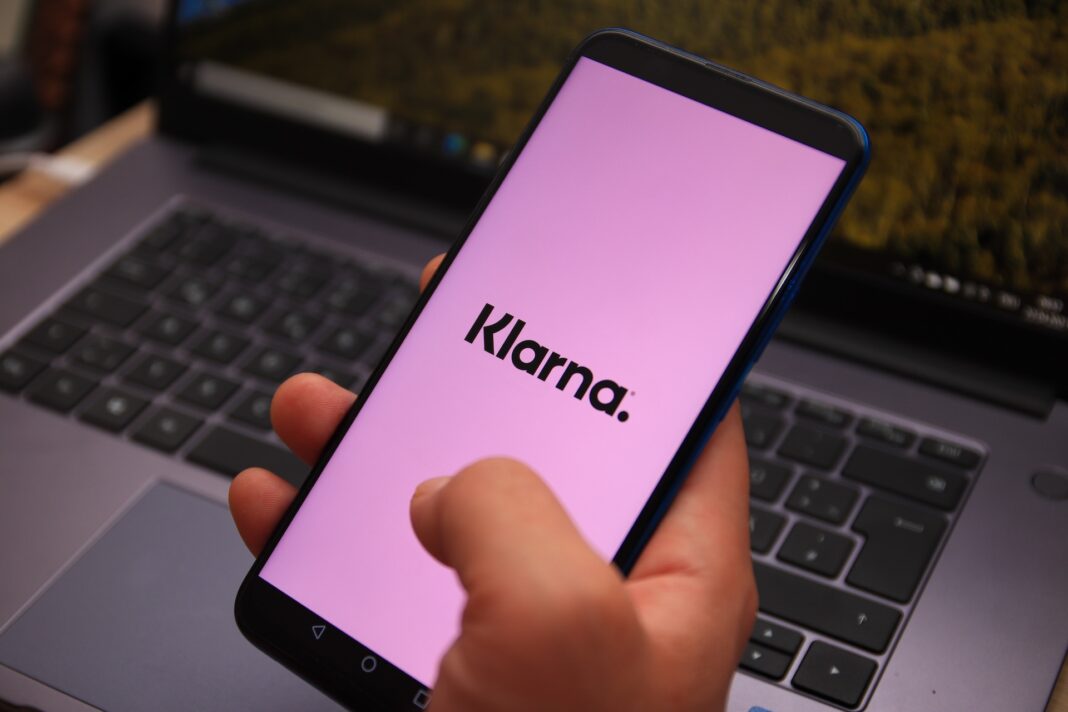
Buy Now, Pay Later has evolved from a checkout feature aimed largely at online fashion shoppers into a significant part of the consumer credit market. Klarna may still be one of the most recognisable names in the sector, but consumers in 2026 can choose from a growing number of apps like Klarna, ranging from simple four-payment services to platforms offering multi-year installment loans.
The appeal is easy to understand. Instead of putting a purchase on a revolving credit card, customers can divide the amount into predictable installments, frequently without paying interest if the balance is cleared quickly. But the idea that BNPL is always free is becoming increasingly outdated. Some providers charge origination or service fees, while longer repayment plans can carry annual percentage rates comparable to those of credit cards.
BNPL is also no longer a niche form of financing. According to the Federal Reserve’s latest survey of U.S. households, published in May 2026, 16% of adults had used BNPL during the previous 12 months, up from 10% when the Fed first measured its use in 2021. At the same time, 26% of BNPL users reported having made at least one late payment.
For consumers comparing the leading Klarna alternatives, the most important question therefore is not simply which app offers installments, but how those installments are priced.
What are Buy Now, Pay Later apps?
BNPL services provide short-term financing directly at the point of sale. The traditional model is often called Pay in 4: the customer pays approximately 25% of the purchase immediately and the remaining balance in three additional installments, typically every two weeks.
A $400 purchase, for example, might be divided into four payments of $100 over six weeks.
The traditional model competed with credit cards by offering 0% interest and a relatively simple approval process. Increasingly, however, companies such as Klarna, Affirm, Afterpay and PayPal also offer longer-term installment loans stretching from several months to two years or more.
The Federal Reserve noted in June 2026 that BNPL has consequently developed well beyond its original Pay-in-4 format, with providers increasingly offering both short-term and longer-term point-of-sale credit products.
That makes comparing providers more complicated. A company can simultaneously offer one 0% product and another carrying an APR above 30%.
Read also: What is QFS? Conspiracy theory or a real technological direction that could reshape finance
BNPL apps list 2026: fees and interest rates compared
The following table compares some of the most important apps like Klarna. The figures primarily reflect publicly disclosed U.S. consumer terms as of September 2026. Exact offers depend on creditworthiness, merchant, purchase amount, location and other eligibility criteria.
| Provider | Main short-term option | Interest / APR | Main consumer fees | Longer-term financing |
|---|---|---|---|---|
| Klarna | Pay in 4 | 0% on standard Pay in 4; financing 0–35.99% APR | No fee on standard Pay in 4 when paid on time; service fee may apply to one-time cards | Usually 6–24 months |
| Affirm | Pay in 4 | 0% for Pay in 4; 0–36% APR on other plans | No late fees; no compounding interest | Various monthly terms |
| Afterpay | Pay in 4 | Usually 0% at partner merchants; monthly plans 0–35.99% APR | Late fee up to $8 per missed installment; finance fee can apply to some transactions | 3, 6, 12 or 24 months |
| PayPal Pay Later | Pay in 4 | 0%; Pay Monthly typically 9.99–35.99% APR | No Pay in 4 late or sign-up fee | 3–24 months |
| Sezzle | Pay in 4 / Pay in 5 | No traditional interest on Pay in 4, but service fees can create a positive APR | Service fee can apply | Monthly financing also available |
| Zip | Pay in 2, 4 or 8 | APR varies depending on applicable fees | Origination fee can apply | Multiple installment structures |
| Splitit | Credit-card installments | Eligible retail plans can add 0% interest | No added Splitit interest or fees on eligible retail plans | Flexible monthly installments |
There is one important detail when interpreting this table: 0% interest does not necessarily mean 0% APR. A BNPL loan can technically charge no interest but still include a service or origination fee. Because APR attempts to express the total financing cost on an annualised basis, even a relatively small fee on a six-week loan can translate into a surprisingly high APR.
That distinction has become particularly important when comparing newer BNPL pricing models.
1. Affirm – one of the strongest Klarna alternatives for longer financing
Affirm is arguably one of the closest direct competitors to Klarna for consumers who want both short-term and longer-term financing.
Its Pay in 4 option divides eligible purchases into four interest-free installments. For larger purchases or longer repayment periods, Affirm currently advertises financing ranging from 0% to 36% APR, depending on the customer, merchant and transaction. According to Affirm’s own financing information, the company also does not charge late fees or compound interest.
This makes Affirm particularly interesting for users who want more flexibility than a six-week BNPL plan provides. Instead of forcing every transaction into the same repayment schedule, the platform can offer different terms depending on the purchase.
The trade-off is that longer financing can become considerably more expensive. A consumer qualifying near the upper end of Affirm’s APR range should therefore compare the total repayment cost with a credit card or conventional personal loan rather than focusing solely on the size of the monthly payment.
Best for: larger purchases and consumers who want a choice between Pay in 4 and longer-term financing.
2. Afterpay – a simple Pay-in-4 competitor with monthly financing
Afterpay remains one of the best-known traditional Klarna alternatives.
At participating merchants, its standard Pay in 4 product is free when installments are made on time. Payments are spread across approximately six weeks. However, Afterpay explains that finance fees may apply to certain Single Use Payment transactions or gift-card purchases made through its app.
The company has also expanded into longer-term credit. Afterpay Monthly Payment offers eligible U.S. customers terms of 3, 6, 12 or 24 months, with APRs ranging from 0% to 35.99% depending on eligibility and merchant.
Late payments are another consideration. According to Afterpay’s published U.S. conditions, customers using Pay in 4 may be charged up to $8 for a missed installment, although total late fees on an order are generally capped.
Afterpay therefore works particularly well when used in its simplest form: a short Pay-in-4 transaction with a partner retailer and repayments made on schedule.
Best for: frequent retail shoppers looking for straightforward four-payment financing.
3. PayPal Pay Later – the most convenient alternative for existing PayPal users
PayPal has one major advantage over many specialised BNPL companies: millions of consumers already have an account and a huge number of online merchants accept PayPal.
Its BNPL offering is divided primarily into Pay in 4 and Pay Monthly.
According to PayPal’s Pay Later information, Pay in 4 covers eligible U.S. purchases and divides them into four biweekly payments at 0% APR. PayPal also states that it charges neither sign-up fees nor late fees for the product.
Pay Monthly is aimed at larger purchases. Customers can spread payments across several months, while the interest rate depends on the individual offer. PayPal currently discloses a standard APR range that can reach 35.99%, although promotional offers can sometimes reduce the rate.
For someone already using PayPal, this is one of the easiest apps like Klarna to adopt because there is no need to build a relationship with an entirely new payments ecosystem.
Best for: consumers who already use PayPal and want BNPL integrated into an existing wallet.
4. Sezzle – interest-free installments, but watch the service fee
Sezzle shows why consumers need to look beyond the phrase “interest-free.”
The platform offers Pay in 4, which divides purchases into four payments over six weeks, as well as other installment and monthly financing options. Sezzle describes its traditional Pay-in-4 offering as interest-free.
However, some transactions can carry a service fee.
The company’s published consumer disclosures show that service fees may apply depending on the transaction and product. That means a loan can have no traditional interest charge while still generating a positive effective APR once the fee is annualised over a very short repayment period.
This does not necessarily mean that a customer pays a large percentage of the purchase price in fees. It instead demonstrates why APR and the actual dollar cost need to be considered together when assessing short-term credit.
For shoppers, Sezzle can still be inexpensive when no service fee applies. The important step is checking the final financing disclosure before confirming the transaction.
Best for: shoppers who want flexible short-term repayment options and carefully review transaction-specific fees.
5. Zip – flexible, but financing may come with a fee
Zip is another major player in the Pay-in-4 market, but its current U.S. pricing illustrates how the economics of BNPL are changing.
The company allows users to divide eligible purchases into several installment structures, including short-term repayment plans. However, Zip may apply origination fees depending on the purchase and financing option.
As Zip explains in its current terms, these charges vary according to the transaction. Because a relatively modest fee is being charged on a loan that may last only several weeks, the annualised APR can appear substantially higher than the dollar cost alone might suggest.
Again, consumers should distinguish the annualised rate from the actual cash fee. Nevertheless, Zip is not necessarily a completely free alternative to a credit card or Klarna Pay in 4.
Its major strength is flexibility: the app can be used across a wide range of online and physical merchants through virtual-card functionality.
Best for: consumers who value broad merchant acceptance and are willing to check the cost of each transaction individually.
Read also: Portfolio Diversification: How to Reduce Risk
6. Splitit – a different kind of Klarna alternative
Splitit approaches installment payments differently.
Rather than necessarily giving consumers a completely new credit line, its traditional model uses credit that the shopper already has available on an existing credit card. The purchase is divided into installments while the remaining amount can be reserved through the card’s available credit.
Splitit states that eligible retail installment plans add no additional interest or hidden fees. However, the customer’s normal credit-card terms continue to apply. That means someone who carries the resulting balance may still pay interest to the card issuer.
The company has also broadened its financing infrastructure, allowing merchants to offer different installment structures depending on the market and financing arrangement. Details of its merchant products are available in Splitit’s pricing documentation.
Splitit is therefore not a direct replacement for every Klarna user. It is most relevant for people who already have sufficient credit-card capacity and want to spread a purchase into installments without relying exclusively on a separate BNPL credit line.
Best for: credit-card users who want installment flexibility without relying exclusively on a separate BNPL provider.
How does Klarna itself compare in 2026?
Klarna remains the benchmark against which most of these services are compared because it now spans several different types of payment products.
Its standard Pay in 4 option divides a purchase into four interest-free payments every two weeks, with no extra fee when payments are made on time.
Klarna also offers longer-term financing. Depending on the specific offer, interest rates can rise considerably above 0%, while certain one-time-card transactions may also involve a service fee. Details vary according to merchant, creditworthiness and repayment term.
That means there is no universally cheapest provider among apps like Klarna. The answer depends heavily on the type of transaction.
For a traditional four-payment purchase, Klarna, Affirm, Afterpay or PayPal may all potentially cost nothing when the relevant 0% product is available and every payment is made on time. For longer loans, consumers have to compare individual APR offers.
Which Klarna alternative is best?
For the lowest possible cost, a genuine 0% Pay-in-4 plan with no additional service fee will generally be the strongest option. Klarna, Affirm, Afterpay and PayPal all offer products that can meet those conditions in eligible transactions.
Affirm stands out for consumers who want longer repayment periods. PayPal is particularly convenient for people already using its digital wallet. Afterpay remains focused heavily on retail purchases, while Sezzle and Zip provide broad payment flexibility but require closer attention to transaction fees.
Splitit occupies a separate niche because it can use an existing credit card rather than functioning purely as a new standalone source of credit.
The best BNPL service is therefore not necessarily the app offering the smallest installment. Consumers should compare the total amount repayable, fees, APR, payment frequency and consequences of a missed payment.
The risks of BNPL are becoming harder to ignore
BNPL makes a purchase feel smaller by breaking one large price into several smaller numbers. Economically, however, the consumer still owes the full amount.
The Federal Reserve’s 2026 household survey offers an important warning. Among people who had used BNPL during the previous year, 26% said they had paid late. Some users also reported that BNPL payments had triggered overdraft or insufficient-funds fees at their bank.
BNPL is also increasingly being used beyond discretionary shopping. Data published in the Fed’s supplementary household survey show that consumers are increasingly using BNPL for categories such as groceries, food delivery, travel and healthcare rather than only fashion or electronics.
Another issue is visibility of debt. The Federal Reserve has also highlighted that traditional Pay-in-4 borrowing has historically not always been captured in the same way as conventional credit products.
Using several BNPL apps simultaneously can therefore make a relatively large debt burden appear to be a collection of small independent installments.
BNPL regulation is changing in Europe in 2026
The regulatory environment is also catching up with the industry.
The revised EU Consumer Credit Directive, Directive (EU) 2023/2225, brings many Buy Now, Pay Later arrangements within the scope of consumer-credit regulation. The new framework is scheduled to apply from 20 November 2026, according to the European Commission.
The changes are particularly important because BNPL services have often occupied a grey area between traditional payment methods and conventional loans. Under the new framework, lenders face stronger obligations related to information provided to customers, responsible lending and assessment of creditworthiness.
The European Commission’s overview of consumer-credit rules also emphasises the importance of transparent information about borrowing costs, including APR.
For BNPL companies, this represents a significant shift. The sector grew partly because very short interest-free installment products could look and feel more like payment tools than loans. Regulation is increasingly treating them as what they economically are: a form of consumer credit.
Apps like Klarna are becoming real credit products
The BNPL apps list 2026 looks considerably different from the market of only a few years ago. The industry is no longer limited to four equal, interest-free payments for clothing purchases.
Affirm, Afterpay, PayPal, Sezzle, Zip and Splitit now compete with Klarna across a much broader spectrum of consumer financing. Short-term plans can still provide genuinely free credit, but service fees, origination charges and interest-bearing monthly loans increasingly sit alongside them.
For consumers, the key comparison is therefore not simply Klarna versus another app, but one financing offer versus another.
A 0% installment loan that is comfortably repaid on time can be a useful cash-flow tool. A loan carrying additional fees or an APR above 30%, however, should be evaluated in exactly the same way as any other form of consumer debt: by looking at the total cost, repayment schedule and whether the purchase is affordable in the first place.