


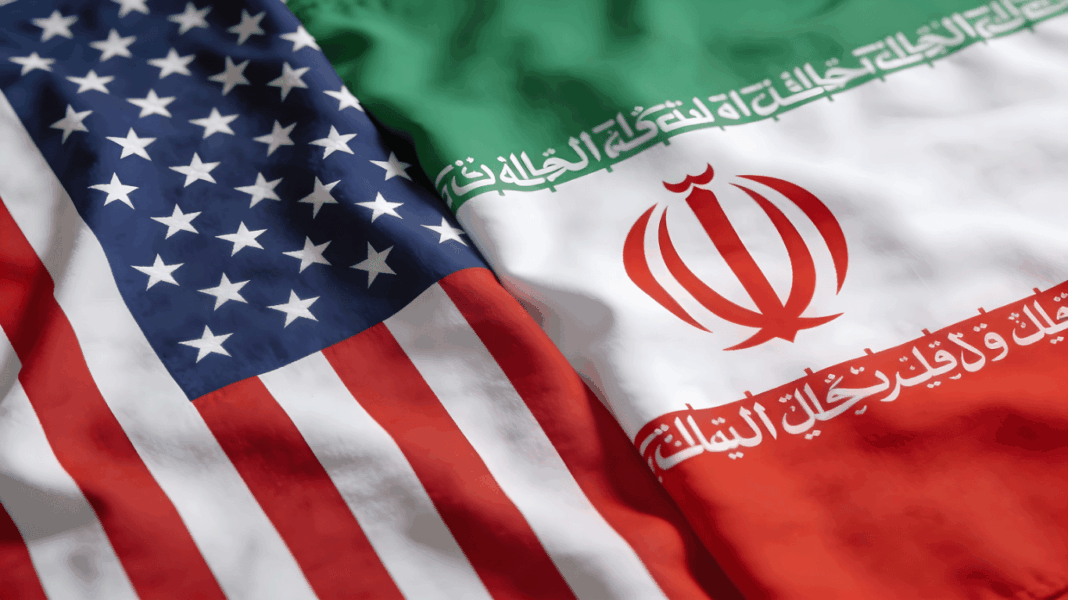
The United States and Iran have reached a preliminary agreement that brought about a ceasefire and, at the same time, the reopening of the Strait of Hormuz to shipping. Trump subsequently announced that he was ordering an end to the blockade and that ships from around the world should continue sailing, which the markets immediately interpreted as a reduction in geopolitical risk in the oil sector. For investors, it is crucial to note that this is not merely a political announcement, but an intervention in one of the world’s most important energy routes, through which a significant portion of global oil supplies passes.
The U.S.-Iran Agreement Changes Market Expectations
The United States and Iran have tentatively agreed to a ceasefire and to the reopening of the Strait of Hormuz, with Trump confirming that he is ordering an end to the blockade and the resumption of shipping through this strategic route. The final draft of the memorandum calls for the immediate reopening of the strait to commercial vessels and the end of the U.S. naval blockade of Iranian ports, with the lifting of the blockade to be completed within 30 days of signing. Another important detail is that, according to available information, this is an agreement that both sides are set to formally sign in Switzerland, which provides a clear timeframe for the entire process. This is important for the market because it reduces the risk of disruptions to oil supplies and, consequently, the geopolitical risk premium that has been reflected in energy prices in recent days.
Why the Strait of Hormuz Is Crucial
The Strait of Hormuz is crucial for the oil market because, according to available sources, approximately one-fifth of the world’s oil passes through this route. This is precisely why any signal regarding its opening or blockade is immediately reflected in oil prices, as the market factors in the risk of a potential supply disruption through the price. In the current situation, it is significant that the agreement is being reported not only by politicians but also by news agencies and media outlets, which are reporting on the actual reopening to commercial vessels and the return of shipping to normal operations. This is a crucial difference for investors, as it is not merely a diplomatic statement but a concrete change in the physical movement of oil.
Oil reacts immediately
The market reacted to this news with a drop in oil prices, with Brent falling 8.70% to $79.16 per barrel since the announcement, and U.S. WTI falling 8.62% to $75.48 per barrel.* Other reports indicated that oil prices hit their lowest level since March following the announcement of the agreement, showing that the market is immediately reassessing the risk to supply. It is also significant that some reports mention the permanent opening of the strait without tolls, as well as the possibility that Iran will temporarily sell sanctioned oil as part of the agreement. If these points are confirmed, this is not just a short-term headline, but a fact that could shift the balance of supply and demand in the oil market. [1]
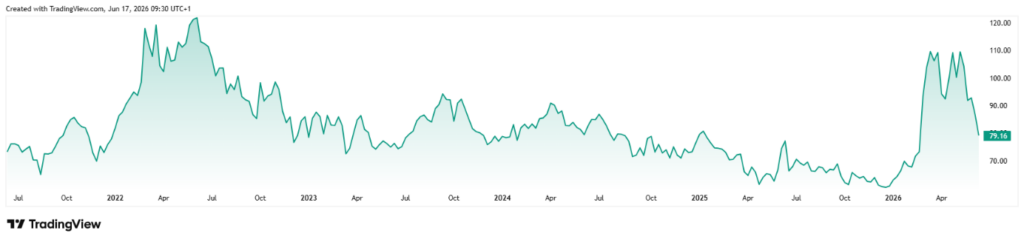
Brent crude oil price trends over the past five years*
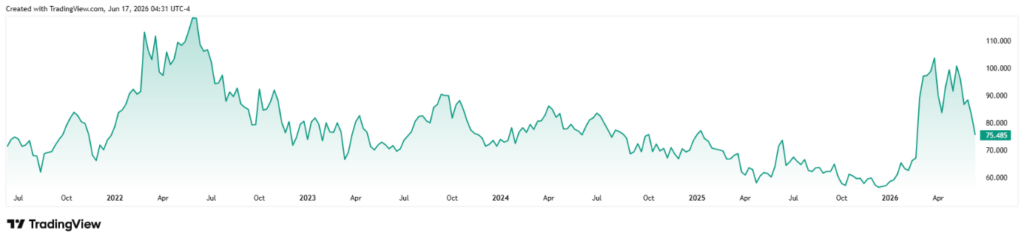
WTI Oil Price Trends Over the Past Five Years*
What This Means for Inflation and the Markets
The decline in oil prices has a direct impact on inflation, as energy is a key input in transportation, production, and the distribution of goods and services. When oil becomes cheaper, pressure on corporate costs gradually eases, and with it, pressure on consumer prices, a development the market automatically interprets as potential relief from inflationary pressures. In this context, Reuters notes that weaker oil prices are also pushing down inflation expectations, which may affect bond yields, the dollar, and the valuation of risky assets. For stocks, this means that lower energy prices may support cost-sensitive segments of the market, while the energy sector may face weaker sentiment. [2]
* Past performance is no guarantee of future results
[1,2] Forward-looking statements are based on assumptions and current expectations, which may be inaccurate, or on the current economic environment, which may change. Such statements do not guarantee future results. They involve risks and other uncertainties that are difficult to predict. Actual results may differ materially from those expressed or implied in any forward-looking statements.
Sources:
Peter Svoreň, executive director of ApmeFX Europe
Paid Partnership