


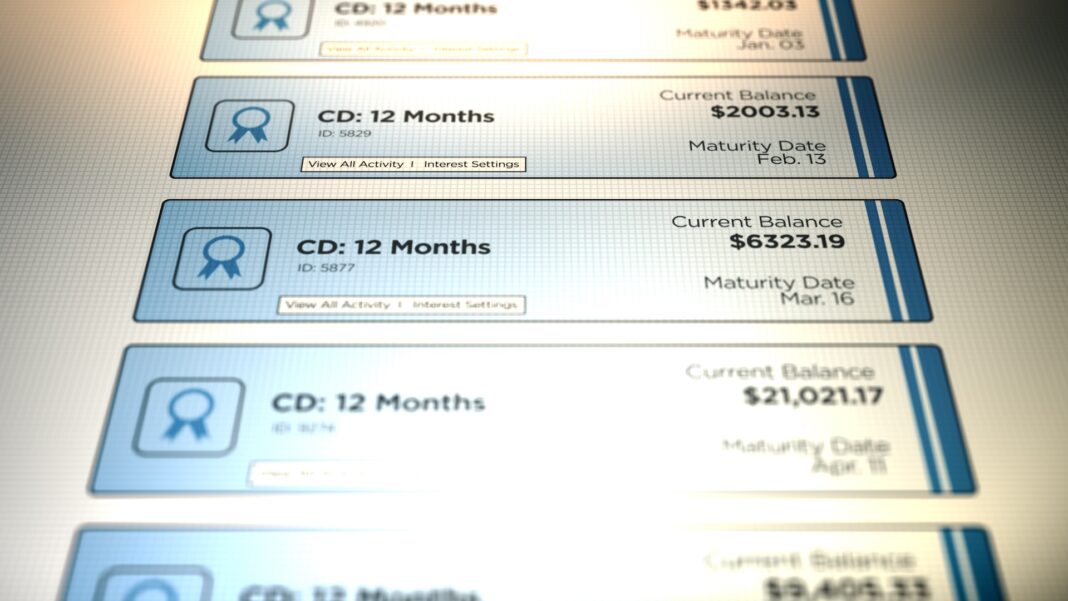
A CD ladder calculator can help savers plan how to earn predictable interest while keeping regular access to part of their money. Certificates of deposit, or CDs, are fixed-term savings products: you deposit money for a set period and typically receive a fixed interest rate in return. As the Consumer Financial Protection Bureau explains, withdrawing money before the CD matures may lead to an early withdrawal penalty.
That trade-off is exactly why many savers use a CD ladder. Instead of putting all their money into one CD with one maturity date, they split it across several CDs that mature at different times. Vanguard describes a CD ladder as a strategy designed to combine the stability of CDs with more flexibility than a single long-term deposit.
A CD ladder calculator turns that strategy into numbers. It can show how much to place in each CD, when each deposit will mature, how much interest each “rung” may earn and how often cash could become available.
Read also: Mortgage Recast Calculator
What Is a CD Ladder Calculator?
A CD ladder calculator is a planning tool that estimates how a CD ladder may perform over time. It usually asks for the total amount you want to deposit, the number of CDs in the ladder, the term of each CD, the annual percentage yield and the compounding frequency.
The principle is similar to compound interest planning. The SEC’s Investor.gov offers a compound interest calculator that shows how money may grow over time based on the initial amount, interest rate, time period and compounding assumptions. A CD ladder calculator applies the same logic to several CDs with different maturity dates.
For example, if you have $25,000 and want to build a five-year CD ladder, you might divide the money into five equal parts of $5,000. One CD could mature after one year, another after two years, another after three years, another after four years and the final one after five years. When the first CD matures, you can either use the money or reinvest it into a new long-term CD.
How a CD Ladder Works
A CD ladder is built around staggered maturity dates. Each CD represents one rung of the ladder. The main goal is to avoid locking all your money into one fixed term while still taking advantage of the potentially higher rates that CDs may offer compared with ordinary savings accounts.
According to the FDIC’s guide to shopping for a certificate of deposit, a bank CD typically offers a higher interest rate than a regular savings account in exchange for keeping the money deposited for a specific term, which can range from a few months to five years or more.
A simple ladder might include:
1-year CD
2-year CD
3-year CD
4-year CD
5-year CD
When the 1-year CD matures, the saver can reinvest that money into a new 5-year CD. If this process continues, one CD matures every year while the rest of the money remains invested in longer-term CDs.
Why Use a CD Ladder Calculator?
A CD ladder calculator helps savers compare different ladder structures before opening multiple CDs. It can answer practical questions such as how much interest the ladder may generate, when money will become available and how much each CD could be worth at maturity.
This is useful because CD planning is not only about return. It is also about timing. The CFPB advises consumers to choose CD maturity dates based on when they expect to need the money, because early withdrawals can reduce returns.
A CD ladder calculator can therefore be especially helpful for people saving for medium-term goals, such as a home down payment, tuition payment, emergency reserve, wedding, car purchase or future tax bill.
Read also: Bitcoin Calculator: A Simple Tool That Shows the Real Value of Your Investment
Example: How to Use a CD Ladder Calculator
Imagine a saver wants to place $20,000 into a four-rung CD ladder. The money is divided equally:
1-year CD: $5,000
2-year CD: $5,000
3-year CD: $5,000
4-year CD: $5,000
If each CD had a hypothetical 4% annual rate compounded annually, the estimated maturity values would look like this:
| CD term | Initial deposit | Estimated value at maturity |
| 1 year | $5,000 | $5,200 |
| 2 years | $5,000 | $5,408 |
| 3 years | $5,000 | $5,624 |
| 4 years | $5,000 | $5,849 |
The total projected value would be about $22,081 before taxes and without accounting for possible early withdrawal penalties.
In reality, rates may differ by term, bank and market conditions. Some CDs may also renew automatically when they mature. The CFPB explains that a CD rollover or renewal can occur at the end of a CD term, meaning the original deposit and sometimes the earned interest may be placed into a new CD.
What Should a CD Ladder Calculator Include?
A useful CD ladder calculator should include more than a basic interest estimate. It should also help savers understand the timing and structure of the ladder.
The most important inputs are:
Total deposit amount
Number of CDs or ladder rungs
Deposit amount per CD
CD terms and maturity dates
Annual percentage yield
Compounding frequency
Estimated interest earned
Final maturity value
Reinvestment assumptions
The best calculators also allow users to test different strategies. For example, one saver may want equal deposits across all CDs, while another may prefer putting more money into longer-term CDs if rates are higher.
CD Ladder Calculator vs. Regular Savings Calculator
A regular savings calculator usually assumes one account, one rate and one timeline. A CD ladder calculator is more specific because it models multiple deposits with different maturity dates.
That difference matters. CDs are not as liquid as normal savings accounts. The FDIC notes that CDs usually require savers to keep money deposited for a specified term, while the CFPB warns that early withdrawals may trigger penalties.
A CD ladder calculator therefore helps savers think about both return and access. It is not only about how much interest can be earned, but also about when the money becomes available.
Are CD Ladders Safe?
CD ladders can be relatively low risk when the CDs are issued by insured institutions and deposits remain within insurance limits. The FDIC explains that deposit insurance protects money held at FDIC-insured banks in the event of a bank failure.
Certificates of deposit are among the products covered by FDIC insurance. In its deposit insurance materials, the FDIC lists time deposits, including CDs, as insured deposit products.
However, insurance limits still matter. Savers should check whether their bank is FDIC-insured and make sure their deposits do not exceed the applicable coverage limits. A CD ladder calculator can estimate returns, but it cannot verify deposit insurance coverage.
What a CD Ladder Calculator Cannot Predict
A CD ladder calculator can estimate returns based on current assumptions, but it cannot predict future interest rates. If rates rise after you open a CD, part of your money may be locked into a lower rate until maturity. If rates fall, however, already-opened CDs may continue earning the fixed rate agreed at the start.
The calculator also cannot predict your liquidity needs. If you unexpectedly need cash before a CD matures, an early withdrawal penalty may apply. That is why a CD ladder should not replace an emergency fund that needs to remain fully accessible.
Taxes are another limitation. A CD ladder calculator may show gross interest, but it may not calculate after-tax returns. Depending on where the saver lives and how the CD is held, interest income may be taxable.
Who Should Consider Using a CD Ladder Calculator?
A CD ladder calculator may be useful for conservative savers who want more predictability than the stock market and more structure than a basic savings account. It can also help people who want regular access to part of their savings without keeping the full amount in cash.
A CD ladder may suit people who are saving for a known future expense, managing a cash reserve, planning retirement income or trying to reduce the risk of committing all their money to one interest rate at one point in time.
It may be less suitable for people who need immediate access to all their money, are comfortable with investment risk, or want the potential for higher long-term growth through stocks, bonds or other assets.
Bottom Line: A CD Ladder Calculator Helps Turn Savings Into a Plan
A CD ladder calculator can make conservative saving more strategic. By splitting money across CDs with different maturity dates, savers can estimate interest, plan cash flow and avoid putting all their savings into one locked term.
The strategy is not complicated, but the details matter. Rates, maturity dates, early withdrawal penalties, compounding, taxes and deposit insurance can all affect the final result. Used well, a CD ladder calculator helps savers see not only how much they might earn, but also when their money will be available.