


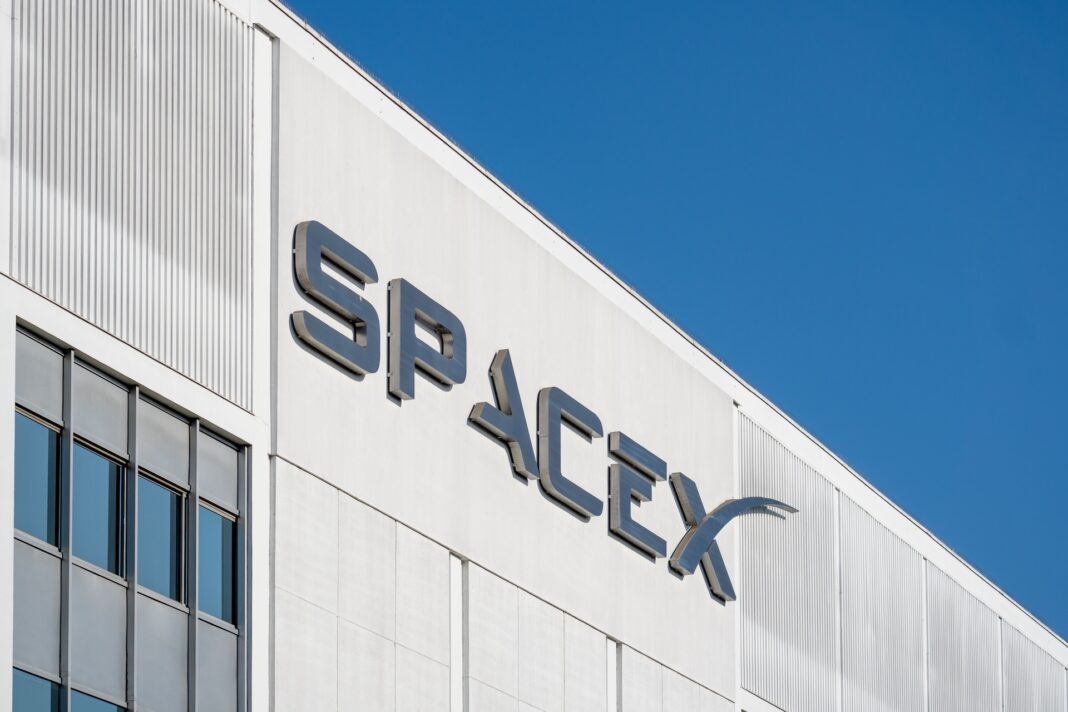
For years, the phrase spacex ipo sounded almost mythical. Investors followed every tender offer, every Starlink milestone and every Elon Musk comment, hoping that one of the world’s most valuable private companies would finally open its doors to the public market. Now the space race has entered a new phase. According to Reuters, SpaceX priced a record $75 billion initial public offering at $135 per share, turning one of the most closely watched private companies in the world into a public-market story.
The SpaceX IPO is not just another technology listing. It marks the moment when the commercial space economy became impossible for mainstream investors to ignore. SpaceX is not only a rocket company. Its business touches satellite internet, launch services, defense contracts, lunar infrastructure, communications and, increasingly, artificial intelligence infrastructure.
Why the SpaceX IPO matters
The scale of the SpaceX IPO is what makes it so important. Reuters described the listing as a record-breaking deal that raised $75 billion and surpassed Saudi Aramco’s 2019 IPO. The company’s shares opened above the IPO price, reflecting enormous demand from investors who had waited years for a way to buy into the SpaceX growth story through the public market.
That excitement is easy to understand. SpaceX has changed the economics of launching cargo and satellites into orbit, while Starlink has turned satellite broadband from a niche service into a mass-market product. The company is also deeply connected to government and defense contracts, which gives it a strategic position that few technology companies can match.
But the same factors that make SpaceX exciting also make the stock risky. A high-profile IPO can attract investors quickly, but it can also create volatility. Shortly after the debut, Reuters reported that short-selling bets against SpaceX had increased after the stock pulled back from its post-IPO highs. That is a reminder that even the most powerful growth stories can face sharp market swings.
What does “investing ahead of the SpaceX IPO” mean now?
Before the spacex ipo, most retail investors could not buy SpaceX shares directly. Access was largely limited to insiders, venture funds, private-market investors and selected institutional buyers. Ordinary investors had to look for indirect exposure through public companies connected to rockets, satellites, defense, telecoms or space-themed ETFs.
Now that SpaceX is public, the question changes. Investors are no longer only asking how to invest before the SpaceX IPO. They are asking how to invest before the next stage of the space economy.
That can mean buying SpaceX shares directly. It can also mean looking at companies that may benefit from the same long-term trend: cheaper launches, satellite broadband, direct-to-device connectivity, military space spending, orbital infrastructure and data transmission from space.
The space economy is no longer only about exploration. It is increasingly about infrastructure. Satellites support internet access, navigation, climate monitoring, defense systems, disaster response, logistics and mobile communications. That is why investors are beginning to treat space not as science fiction, but as a serious stock-market sector.
Direct exposure: buying SpaceX stock
The most obvious way to invest after the SpaceX IPO is to buy SpaceX shares through a brokerage account that offers access to U.S.-listed stocks. This gives investors direct exposure to the company’s launch business, Starlink network, government contracts and future space infrastructure projects.
However, direct exposure also means direct valuation risk. SpaceX is priced not only on what it earns today, but also on what investors believe it could become over the next decade. Those expectations include Starship, Starlink, defense contracts, lunar and Mars-related ambitions, satellite-based data infrastructure and potentially AI-driven projects.
This is where investors need to be careful. A company can be revolutionary and still be expensive. If too much future growth is already included in the share price, even strong business results may not be enough to push the stock higher. The spacex ipo gives investors access to a rare company, but it does not remove the basic rules of valuation.
SpaceX and the AI angle
One of the newer parts of the SpaceX investment story is artificial intelligence. According to Reuters, SpaceX launched a $25 billion notes offering to support debt repayment and its expansion into AI-related infrastructure, including data centers, computing hardware and power needs.
That matters because SpaceX may increasingly be valued not only as a space company, but also as an infrastructure company for the next phase of the digital economy. If satellites, data centers and AI infrastructure become more closely connected, SpaceX could sit at the intersection of several major investment themes at once.
The risk is that these projects require enormous capital. Rockets, satellites, launch facilities, data centers and computing infrastructure are expensive. Investors should therefore watch not only revenue growth, but also debt, cash flow, margins and the company’s ability to finance expansion without putting too much pressure on its balance sheet.
Indirect exposure: Rocket Lab and the launch economy
Investors who do not want to rely only on SpaceX can look at other publicly traded companies in the space ecosystem. One of the most closely watched names is Rocket Lab, which provides launch services, spacecraft systems and satellite components.
Rocket Lab is much smaller than SpaceX, but that is part of its appeal for some investors. The company gives public-market exposure to the growth of the launch economy without requiring investors to buy the dominant player at a very high valuation. According to Rocket Lab’s investor materials, the company operates across launch services and space systems, making it more than just a rocket start-up.
The logic behind this investment route is simple. If more satellites are launched, more companies will need rockets, propulsion systems, components, software, spacecraft platforms and mission services. SpaceX may remain the leader, but the growth of the sector could create room for multiple winners.
Satellite broadband and direct-to-phone connectivity
Another way to invest around the SpaceX IPO theme is satellite communication. Starlink has made satellite internet a mainstream story, but other companies are trying to build different types of orbital connectivity.
AST SpaceMobile, for example, is focused on direct-to-cell broadband. Its goal is to connect ordinary smartphones to satellites without requiring users to buy special satellite phones. The company describes its mission on its investor relations website as building a space-based cellular broadband network.
This part of the market could be attractive because the problem is easy to understand. Many parts of the world still have weak or unreliable mobile coverage. If satellite networks can connect standard phones in remote areas, the addressable market could be large.
At the same time, execution risk is high. Satellites are expensive, regulation is complicated, telecom partnerships are essential and commercial rollouts can take longer than investors expect. This makes satellite connectivity a potentially powerful theme, but not a low-risk one.
Space ETFs: a broader way to play the trend
For investors who do not want to choose individual companies, space-focused ETFs may offer a more diversified approach. A space ETF can include launch companies, satellite operators, defense contractors, communications firms and technology suppliers.
One example is the Procure Space ETF, known by the ticker UFO. According to the fund’s official website, it seeks to track a space-focused index and gives investors exposure to companies connected to space-related industries.
The advantage of an ETF is diversification. Instead of trying to pick whether SpaceX, Rocket Lab, AST SpaceMobile or another company will dominate, investors can spread their exposure across the broader space economy. The disadvantage is that the investor may also own companies with weaker prospects or only partial exposure to the space theme.
Defense and aerospace giants: the conservative space trade
There is also a more traditional route into the space economy: large defense and aerospace companies. Firms such as Lockheed Martin, Northrop Grumman, Boeing and RTX are not pure space stocks, but they have long histories in satellites, defense systems, aerospace engineering and government contracts.
This route may appeal to investors who like the space theme but prefer companies with more diversified revenue streams. A defense contractor is unlikely to move like a high-growth space start-up, but it may also be less exposed to the extreme volatility that often follows newly listed companies.
For conservative investors, this may be a way to benefit from rising government and defense spending in space without depending entirely on the commercial success of one company.
What investors should watch after the SpaceX IPO
The first thing to watch after the spacex ipo is valuation. SpaceX is an exceptional company, but exceptional companies can still disappoint investors if the stock price already assumes years of perfect execution.
The second factor is capital intensity. The space business requires massive spending. Rockets, satellites, ground stations, launch pads, AI infrastructure and power systems all require capital. Investors should therefore follow not only revenue growth, but also profitability, debt and cash flow.
The third factor is regulation. Satellite networks depend on spectrum rights, national approvals, launch permissions and international coordination. A delay in one market or a regulatory conflict can affect the entire business model.
The fourth factor is competition. SpaceX is the clear leader in many parts of the market, but the sector is attracting start-ups, defense giants, telecom companies and governments. The larger the space economy becomes, the more crowded it may get.
Finally, investors should watch whether the market begins to value space companies as infrastructure businesses rather than speculative technology stocks. If satellite broadband, launch services and orbital infrastructure become recurring, cash-generating businesses, the sector could mature. If not, it may remain volatile and highly sensitive to investor sentiment.
SpaceX opened the door, but the space race is bigger than one stock
The SpaceX IPO has given public investors something they wanted for years: direct access to one of the most important private technology companies of the modern era. But investing in the space economy should not begin and end with one ticker.
SpaceX may be the flagship. Rocket Lab offers launch and spacecraft exposure. AST SpaceMobile represents the direct-to-phone satellite opportunity. Space ETFs provide diversification. Defense and aerospace giants offer a more conservative route into government-backed space spending.
The real opportunity is not simply buying into the hype of the spacex ipo. It is understanding that space is becoming a stock-market sector in its own right. The winners will not be chosen by headlines alone, but by execution, contracts, margins, funding discipline and the ability to turn orbital ambition into sustainable business.