

Forex is the largest financial market in the world, where national currencies are traded. Trillions of dollars change hands every day, and alongside banks and investment funds, retail traders are increasingly entering the market. The availability of online platforms has significantly lowered entry barriers. However, educational materials from brokers such as Saxo Bank, IG, and CMC Markets repeatedly emphasize that forex trading is a specific type of market activity that requires understanding core principles, terminology, and risk management.
For beginners, it is essential to realize that forex trading is not traditional investing — it is active trading.
What is forex and why it works differently from stocks
Forex (foreign exchange) is a global marketplace for currency exchange. Unlike stocks, you do not invest in a company. Instead, you speculate on the price movement between two currencies.
Trading always takes place in currency pairs, such as EUR/USD. The first currency in the pair is the one being traded, while the second currency is used to measure its value. If you expect the euro to strengthen against the dollar, you buy the pair. If you expect it to weaken, you sell.
IG’s educational guides highlight that the ability to profit from both rising and falling markets is one of the key reasons why forex trading attracts active traders.
Read also: How to invest: Trading on the stock market
How prices move in forex trading
Currency movements are closely tied to macroeconomic factors. Exchange rates respond to central bank interest rate decisions, inflation data, economic growth figures, and geopolitical events.
This makes forex trading a highly macro-driven market. While stock investors analyze individual companies, currency traders analyze entire economies.
CMC Markets warns that beginners often underestimate this broader context and attempt forex trading without understanding macroeconomic drivers.
Key terms you must understand
Basic terminology is essential because it directly affects both costs and risk.
A currency pair is the combination of two currencies you trade.
The spread is the difference between the bid and ask price and represents a core trading cost.
A pip is the smallest price movement in a currency pair and is used to measure market changes.
Liquidity describes how easily a position can be opened or closed. Major currency pairs usually offer high liquidity and lower transaction costs.
Volatility refers to the speed and size of price movements.
Broker education materials emphasize that spread and volatility have a significant impact on beginner performance in forex trading.
Leverage: the biggest advantage and the biggest risk
Forex trading is typically associated with leverage. Leverage allows traders to control a larger position than their own capital would normally allow.
With relatively small capital, a trader can open much larger positions. While leverage increases potential profit, it magnifies losses in exactly the same way.
Regulators frequently note that leverage is one of the main reasons many retail traders experience long-term losses. Beginners are therefore advised to use low leverage — or avoid it entirely at the start.
Why forex trading is challenging for beginners
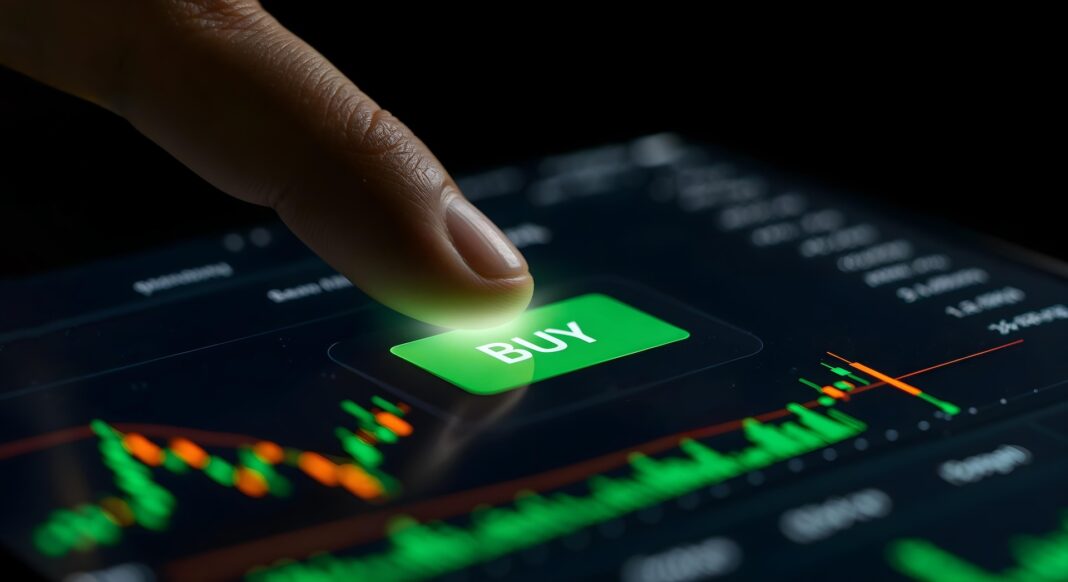
At first glance, trading may seem simple: a platform, a chart, and a buy or sell button. In reality, forex trading combines technical knowledge, psychological discipline, and structured risk management.
Beginners often trade too frequently, use excessive leverage, and operate without a clear strategy. This leads to unstable results. Another challenge is market speed. Forex markets react instantly to news releases and macroeconomic data, which can be difficult for new traders to interpret correctly.
Read also: S&P 500 Explained: Do You Know What You’re Investing In?
How to start more safely
Across educational guides, several recommendations consistently appear. Begin with education, understand key terminology, use a demo account, and focus on major currency pairs with lower costs and more stable behavior.
Risk management is crucial — for example, defining how much of your capital you are willing to risk on a single trade. Professional materials often stress that without risk management, long-term success in forex trading is unlikely.
Beginners should also account for additional costs. Besides the spread, there may be overnight holding fees or differences in pricing structures between brokers.
Forex trading as a skill, not a shortcut
International educational resources agree that forex trading is not an investment product but a skill. It requires time, strategy testing, discipline, and realistic expectations. Without these, it can quickly become a source of financial losses.
For beginners, the rule is simple: understand the process first, trade second. Forex trading rewards patience, risk control, and continuous learning.