

Volatility is one of the most frequently discussed concepts in investing — and at the same time one of the least understood. While experienced traders use it daily, many investors perceive it only as abstract “market fluctuations.” In reality, it determines how much your investment can gain, how much you can lose, and how quickly both can happen.
At a time when financial markets react almost instantly to geopolitics, inflation, or central bank decisions, volatility has become one of the most important indicators.
What is volatility and how to understand it
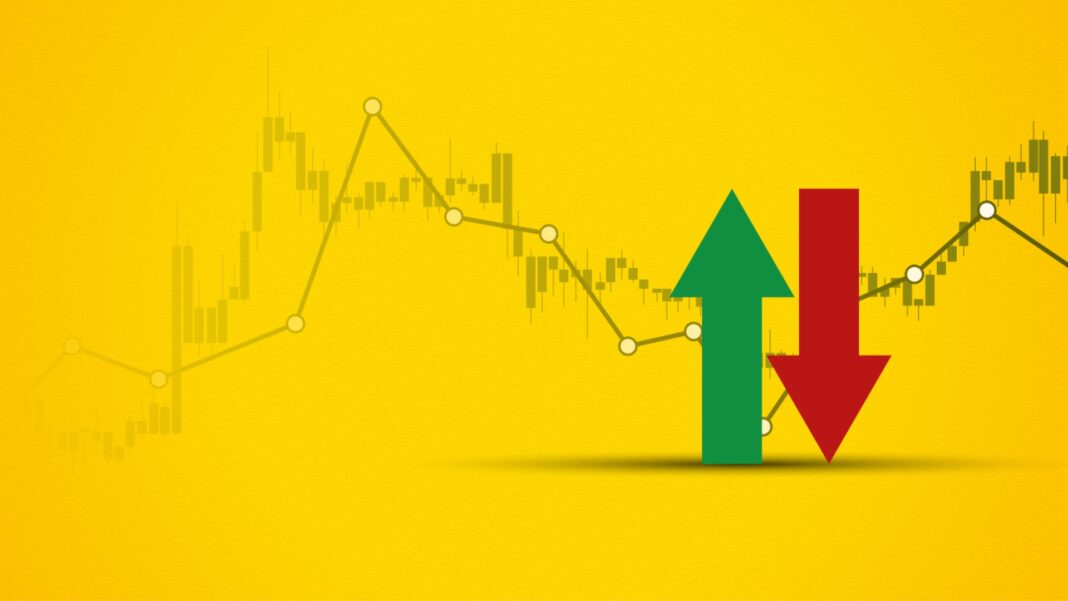
Volatility measures the degree of price fluctuation of an asset over time. In other words, it shows how significantly and how quickly the price moves — regardless of whether it rises or falls.
For example, if a stock fluctuates by several percent daily within a week, it is considered highly volatile. On the other hand, a stable asset that moves only by fractions of a percent exhibits low volatility.
It is crucial to understand that volatility says nothing about the direction of the market. It is not an indicator of growth or decline, but of movement intensity. That is why volatility can be high both during market euphoria and during panic.
Read also: Bitcoin volatility will be calmed by the arrival of other institutional investors
Volatility as a measure of risk
In financial theory, a simple rule applies: the higher the volatility, the higher the risk. Investments that move significantly are less predictable — but they can also generate higher returns.
A typical example is cryptocurrencies. Bitcoin and altcoins commonly experience daily fluctuations of several percent, sometimes even tens of percent. On the other side are assets such as government bonds, which generally show much lower volatility.
This relationship between risk and return is one of the fundamental principles of investing. Volatility thus acts as a kind of “uncertainty barometer” in financial markets.
How volatility is measured
Volatility is not just a feeling or a subjective impression. It is a precisely defined statistical metric, most commonly expressed as the standard deviation of returns.
In practice, this means measuring how much individual returns deviate from the average. The larger the deviations, the higher the volatility.
Investors typically work with two main types:
Historical volatility is based on past data and shows how the price of an asset behaved in the past.
Implied volatility, on the other hand, reflects market expectations for the future and is often used in options pricing.
The difference between them is essential — one describes reality, the other reflects expectations and investor sentiment.
Read also: US Stocks Decline Amid Middle East Tensions
Why volatility increases (and when to be cautious)
Volatility is not constant. It changes over time and reacts to specific events. It most often rises during periods of uncertainty or shocks.
Typical triggers include:
macroeconomic data (inflation, interest rates),
central bank decisions,
geopolitical conflicts,
corporate earnings seasons,
or crises such as the COVID-19 pandemic.
For example, in March 2020, volatility in global markets surged to extreme levels not seen since the 2008 financial crisis. Markets react similarly today to changes in interest rates or geopolitical tensions.
Volatility as both opportunity and risk
While volatility can be uncomfortable for long-term investors, it represents an opportunity for active traders. Large price movements make it possible to generate profits even within a short time frame.
That is why some traders actively seek volatility. In contrast, conservative investors tend to avoid it and prefer more stable assets.
Interestingly, volatility itself is neither good nor bad. It is simply a characteristic of the market. What matters is how investors work with it.
How to use volatility in practice
Understanding volatility allows investors to manage their strategies more effectively. It is commonly used for:
position sizing,
risk management (stop-loss),
portfolio diversification,
asset selection.
Diversification plays a crucial role. Combining assets with different levels of volatility can help reduce overall portfolio risk without significantly limiting potential returns.
Why volatility matters to you
Volatility is not just a technical concept for analysts. It affects everyone who invests — whether in stocks, cryptocurrencies, or funds.
It determines how calmly you can sleep during market fluctuations, how large losses you can tolerate, and how realistic your return expectations are.
At a time when markets are becoming increasingly dynamic and interconnected, volatility is key to understanding what is truly happening.
Sources:
https://www.home.saxo/cs-cz/learn/guides/market-volatility/what-is-market-volatility-and-why-does-it-matter-for-investors
https://www.csas.cz/cs/blog/investovani/investicni-jednohubka-volatilita
https://www.lynxbroker.cz/investovani/burzovni-trhy/opce/volatilita/zaklady-obchodovani-opci-9-historicka-vs-implikovana-volatilita
https://www.xtb.com/cz/vzdelavani/trzni-vykyvy-role-volatility-a-nejistoty