


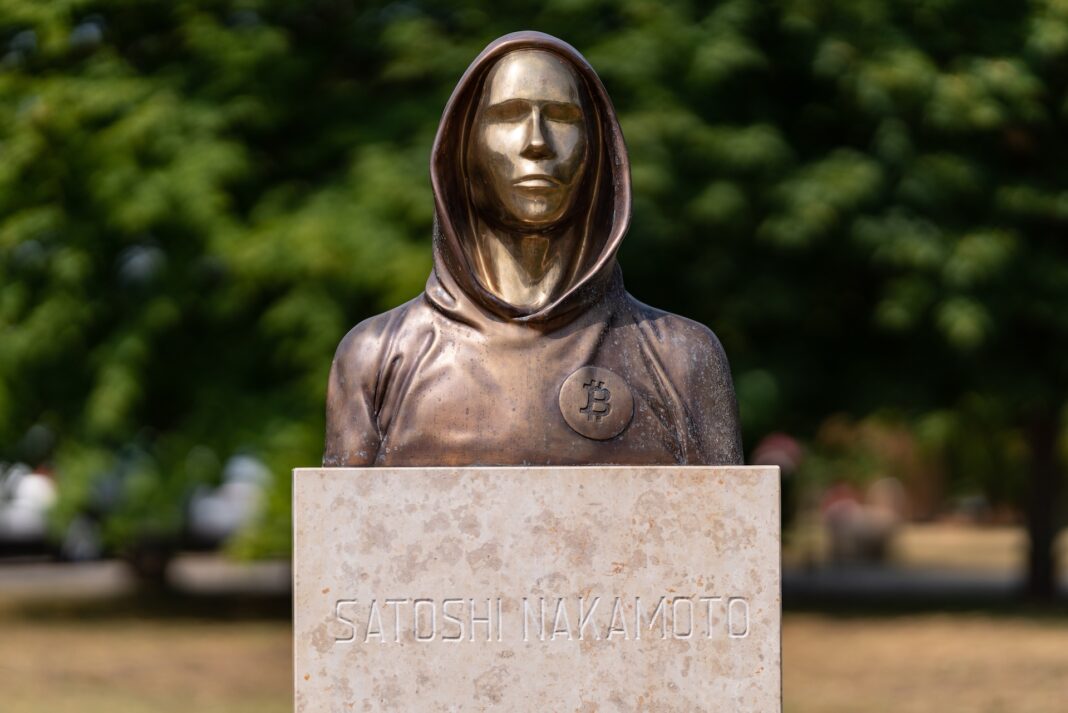
The mystery that has fascinated the crypto world for more than fifteen years is once again coming back into focus. The American newspaper The New York Times has published its own investigation suggesting that the pseudonym Satoshi Nakamoto may hide British cryptographer Adam Back. Back, however, has long denied the claim — and rejected it again after the article was published.
Who is behind Bitcoin
Bitcoin is the most well-known and widely used cryptocurrency in the world, yet its true creator remains unknown. Since its launch on January 3, 2009, it has operated as a decentralized system without a central authority controlling the money supply or overseeing transactions. This principle lies at the heart of its philosophy — no one, not governments nor even its creator, should be able to manipulate, censor, or devalue the currency.
Behind Bitcoin stands an anonymous developer or group of developers operating under the pseudonym Satoshi Nakamoto. In October 2008, Nakamoto published a paper titled “A Peer-to-Peer Electronic Cash System,” outlining the concept of a decentralized digital currency. Two years later, in 2011, Nakamoto disappeared from public view and has not been heard from since.
Read also: When Is the Next Bitcoin Halving? The Date of the Next Mining Reward Reduction Is Approaching
Clues point to a British cryptographer
According to the New York Times investigation, the mysterious creator could be Adam Back, a British cryptographer and a prominent figure in the early cryptographic movement. The newspaper bases its conclusions on a combination of historical documents, writing style analysis, and technical expertise.
Back was deeply involved in the cypherpunk community, which has advocated for privacy through cryptography since the early 1990s. Like Satoshi Nakamoto, he specialized in asymmetric cryptography and computer network security. Both also explored the issue of email spam and proposed similar approaches to mitigate it.
A key piece of evidence comes from email exchanges from the late 1990s, where Back discussed the concept of electronic cash independent of government institutions. In these discussions, he described a decentralized network of nodes capable of functioning even in the face of attempts to control it — a principle that later became fundamental to Bitcoin.
A similar pattern of behavior and timing
The investigation also highlights intriguing timing correlations. After launching Bitcoin, Satoshi Nakamoto spent roughly two and a half years developing the project before disappearing in 2011. Adam Back, on the other hand, had been actively involved in discussions about electronic money within the cypherpunk community for years, but was reportedly unusually inactive when Bitcoin was introduced in 2008.
Shortly after Nakamoto disappeared, Back re-emerged and published his first contributions related to Bitcoin. This “inverse pattern,” as described by the investigators, is considered another piece of circumstantial evidence.
Read also: Cryptography and Bitcoin: How Math Replaces Banks and Secures Billions
Back denies the claims
Adam Back has repeatedly denied any connection to Satoshi Nakamoto. In response to direct questions from the BBC, as well as after the New York Times article, he stated that he is not the creator of Bitcoin. He had already expressed skepticism in 2024, when he wrote on the social platform X that no one knows who Satoshi is — and that this may actually be a good thing. When asked directly by a user to admit it, he responded simply: “It’s not me.”
Interestingly, Back was among the first people to receive an email from Satoshi Nakamoto. As early as 2016, the Financial Times also named him as a possible candidate, alongside figures such as Nick Szabo and Hal Finney.
An identity that may never be revealed
The question of who truly stands behind Bitcoin remains unanswered despite the new clues. In the past, individuals such as Australian entrepreneur Craig Wright have claimed to be Nakamoto, but none have provided conclusive evidence. When Back publicly challenged Wright’s claims, the dispute escalated into a legal case — which Wright eventually withdrew, covering the legal costs.
The case of Adam Back thus becomes another chapter in a long line of speculation. And even though the New York Times investigation brings new arguments, a definitive answer is still missing. Perhaps that is precisely the point — for many in the crypto community, the anonymity of Satoshi Nakamoto is not a weakness, but one of the foundational pillars of the entire system.