


Tickmill is a CFD broker founded in 2014 with headquarters in Cyprus. It holds licenses from the FCA, CySEC, and FSA, and serves clients from more than 200 countries. Over ten years of operation, it has built a reputation for low spreads and fast execution.
Nevertheless, complaints are accumulating that cannot be ignored. Clients repeatedly encounter withdrawal issues, rising fees, and deteriorating support. Strong regulation is what saves the broker – without it, the rating would look quite different.
Article Contents:
Quick Facts
| Year Founded | 2014 |
| Regulation | FCA (UK), CySEC (Cyprus), FSA (Seychelles) |
| Minimum Deposit | 100 USD |
| Account Types | Classic, Raw |
| Platforms | MT4, MT5, TradingView, Tickmill Trader |
| Execution Speed | ~15 ms (industry average 60 ms) |
| Leverage | up to 1:1000 (outside EU/UK) |
| Inactivity Fee | yes, after 12 months |
| Real Stocks/ETFs | no |
Pros and Cons
Tickmill has genuine strengths, but recent years have added reasons for caution.
Pros
- Strong FCA + CySEC regulation, negative balance protection
- Low spreads on Raw account (EUR/USD from 0.1 pips)
- Fast order execution (~15 ms)
- Deposits and withdrawals formally fee-free
- Free VPS hosting for algo trading
- Islamic (swap-free) account available
Cons
- Commission on Raw account increased to 6 USD per lot – a 50% increase from the original price
- Spreads on Classic account average; EUR/USD around 1.7 pips
- Swap fees above industry average
- In 2025, popular tools Autochartist, Pelican, and Capitalise.ai were removed
- Withdrawals can take up to 8 business days if you deposited by card
- Broker handles complaints slowly and some clients report their requests being ignored
- Limited choice of account currencies: only USD, EUR, GBP, ZAR
What the Platform Offers (Assets)
Tickmill covers basic asset classes but lags behind the largest brokers in breadth of offerings. It is primarily built for active forex and CFD traders, not for investors building long-term portfolios.
- Forex – dozens of currency pairs including exotics
- Indices – CFDs on S&P 500, DAX, FTSE and others
- Commodities – oil, gold, silver
- Bonds – CFDs on government bonds
- Cryptocurrencies – CFDs only, not real purchase
- Stocks – CFDs; the UK entity additionally offers real futures and options
You Might Like: Cryptocurrency Investment
Fees
The fee structure looks good on paper. In practice, however, several things sting.
Classic account operates commission-free, you pay only the spread (EUR/USD averaging ~1.7 pips). Acceptable for beginners, but nothing exceptional compared to competitors.
Raw account offers spreads from 0.1 pips plus a 3 USD per side commission, meaning 6 USD per lot. The total cost of a trade works out to approximately 0.7 pips. However, the commission was recently only 4 USD per lot – clients took the 50% price increase poorly, with no significant improvement in services to justify it.
Swap fees are above industry average, which makes overnight traders holding positions pay more for trading. After 12 months of inactivity, the broker charges 10 USD/EUR/GBP quarterly.
But the biggest issue isn’t the rates – it’s withdrawals. If you originally deposited funds by card, you cannot withdraw them any other way – not even after years. Some clients waited over a week for a withdrawal while support either ignored their inquiries or delayed responses.
Trading Platform (Applications)
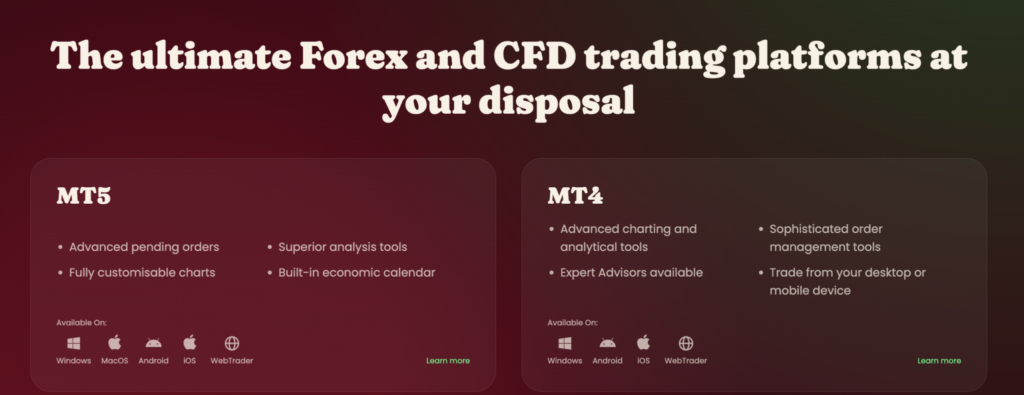
Four platforms are available: MT4, MT5, TradingView, and the proprietary Tickmill Trader as a web and mobile application.
MT4 and MT5 support Expert Advisors, strategy backtesting, and copy trading at no cost. However, MetaTrader’s design feels outdated, the news feed is confusing, and integration with TradingView sometimes suffers from execution delays. Additionally, TradingView and Tickmill Trader are only available for Raw accounts – Classic users are limited to MetaTrader alone. cTrader support is missing.
Read More: eToro – Review of a Well-Known Broker
Security and Regulation
This is undoubtedly Tickmill’s strongest aspect. FCA and CySEC licenses mean segregated client funds, negative balance protection, and access to a financial ombudsman (FOS) in case of disputes.
The Seychelles entity offers leverage up to 1:1000, but with significantly lower client protection. For a European retail trader, an account under FCA or CySEC is the safer choice.
Still – even strong regulation has its limits. One documented case showed that even after an FOS decision in the client’s favor, Tickmill proceeded to close their positions and accounts. The situation was eventually resolved, but the path there was lengthy and stressful.
Conclusion: Tickmill is a regulation-safe broker with good trading conditions for active traders. However, in recent years it has raised prices, removed tools, and handles complaints slowly. If you sign up here, choose an FCA or CySEC entity and a Raw account – and be prepared for the possibility that withdrawals may not always be smooth.
Don’t Miss: Wonderinterest Trading Ltd. Review