

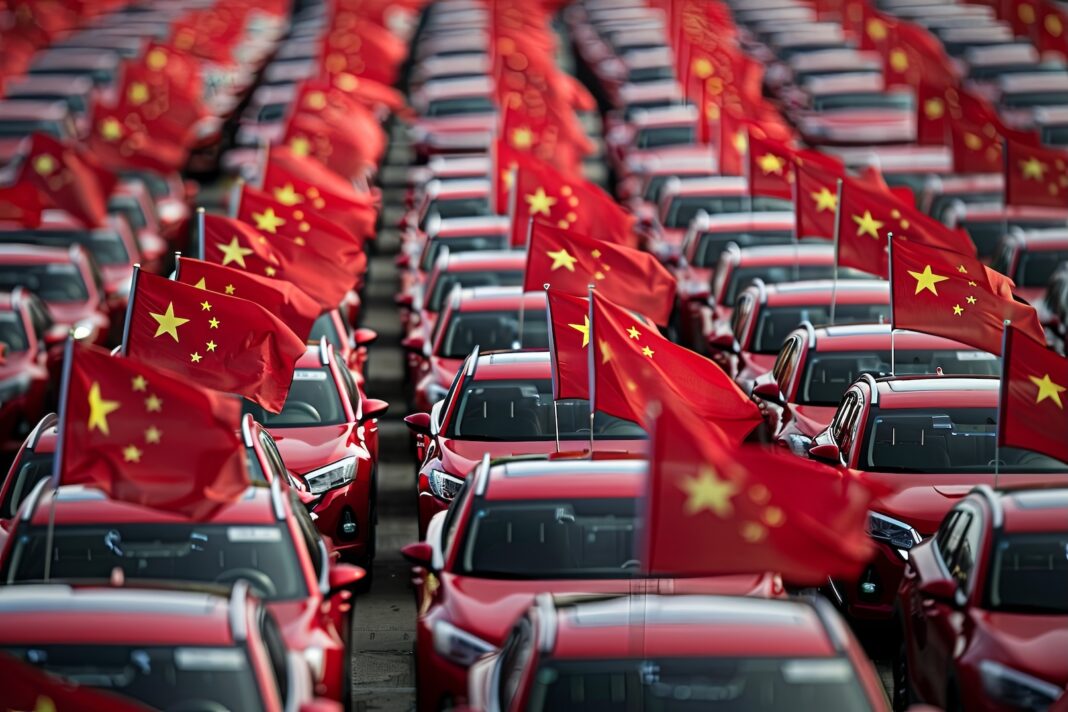
Chinese carmakers have significantly increased their vehicle exports in recent years. However, the true engine of this growth is not competitiveness or innovation, but a systemic practice in which brand-new vehicles are registered as used and exported at discounted prices. According to a report by Reuters, this practice is quietly backed by local and state-level authorities in China.
How the “Fake Used Car” Export Scheme Works
On the so-called grey market, brand-new cars – often directly from the production line with zero mileage – are administratively registered as used. This circumvents certain tax or regulatory restrictions, allowing these vehicles to be sold more cheaply and easily in markets such as Russia, Kazakhstan, the UAE, and other developing countries.
This strategy enables Chinese manufacturers to maintain high export volumes despite weakening domestic demand. According to automotive analyst Tu Le (Sino Auto Insights, Michigan), the trend is a direct result of a four-year price war among domestic manufacturers: “Companies are doing whatever it takes to move inventory – even at the cost of grey-area exports and reputational risk.”
Staggering Figures: Up to 90% of ‘Used’ Exports Are Actually New
According to Wang Meng, an advisor to the China Automobile Dealers Association, up to 90% of the 436,000 vehiclesexported from China in 2023 as used were, in fact, brand-new with zero kilometers on the odometer.
Meanwhile, China overtook Japan in 2023 to become the world’s largest auto exporter, shipping 6.41 million vehicles. However, only a small portion of those were truly second-hand cars, according to industry estimates.
Political Silence, Practical Support
While the issue only recently gained wider public attention following criticism by the CEO of Great Wall Motor, Chinese state media have started addressing it. People’s Daily – often a mouthpiece for top Communist Party leadership – recently warned that these fake used car exports could destabilize the domestic market and called for strong regulatory action.
Nonetheless, Reuters reports that local governments are actively encouraging these exports, seeing them as a means to meet economic targets and maintain employment in the auto sector.
Impact on Global Markets and Trade Tensions
This unofficial export channel is having serious implications for global trade. Countries like Russia have already introduced regulations banning “used” vehicles with zero mileage, especially if the brand already has an official distributor in the country.
Foreign regulators are increasingly concerned that these practices could undercut local dealerships, confuse consumers, and create price distortions. From a macroeconomic perspective, this contributes to rising tensions in global trade, especially with the US and EU, which have already criticized China’s heavy-handed industrial subsidies.
Investment and Market Relevance
For investors and traders, several key considerations emerge:
- Shares of Chinese automakers (e.g., BYD, Chery, Geely, Great Wall) may see short-term export-driven boosts, but face medium-term regulatory and reputational risks.
- Tariff and quota pressures from the US and EU could reshape both China’s export strategies and global supply chains.
- Currency policy and yuan valuation could be impacted if this practice proves crucial to export performance.
- Electric vehicles (EVs), heavily subsidized by the Chinese government, represent a significant share of these exports – adding further geopolitical sensitivity.
Conclusion
The “fake used car” phenomenon is a textbook case of how industrial policy, overcapacity, and administrative maneuvering can distort global markets. Investors, traders, and policymakers should monitor this trend closely – not only for its direct implications in the automotive sector, but for its wider impact on trade balances, foreign policy, and market dynamics.