



Investing in the stock markets is one of the most effective ways to build long-term wealth. The most popular and widely followed stock indices are the S&P 500 and the Nasdaq 100. While both of these indices represent the U.S. market, they have distinct characteristics that can influence your investment decisions. What is the difference between them, and which index should be part of your investment strategy?
Article content:
S&P 500: Broad exposure to the US economy
The S&P 500 is a stock index that includes the 500 largest publicly traded companies in the United States. This index is considered one of the best indicators of the performance of the US economy because it covers a wide range of sectors. The S&P 500 includes companies in technology, healthcare, finance, consumer goods, and many others. This diversity means that the index is very diversified. Investing in the S&P 500 therefore allows you to participate in the growth of the entire US economy without having to pick individual stocks. This index is ideal for investors looking for stability and long-term growth.

Nasdaq 100: Technological and innovative growth
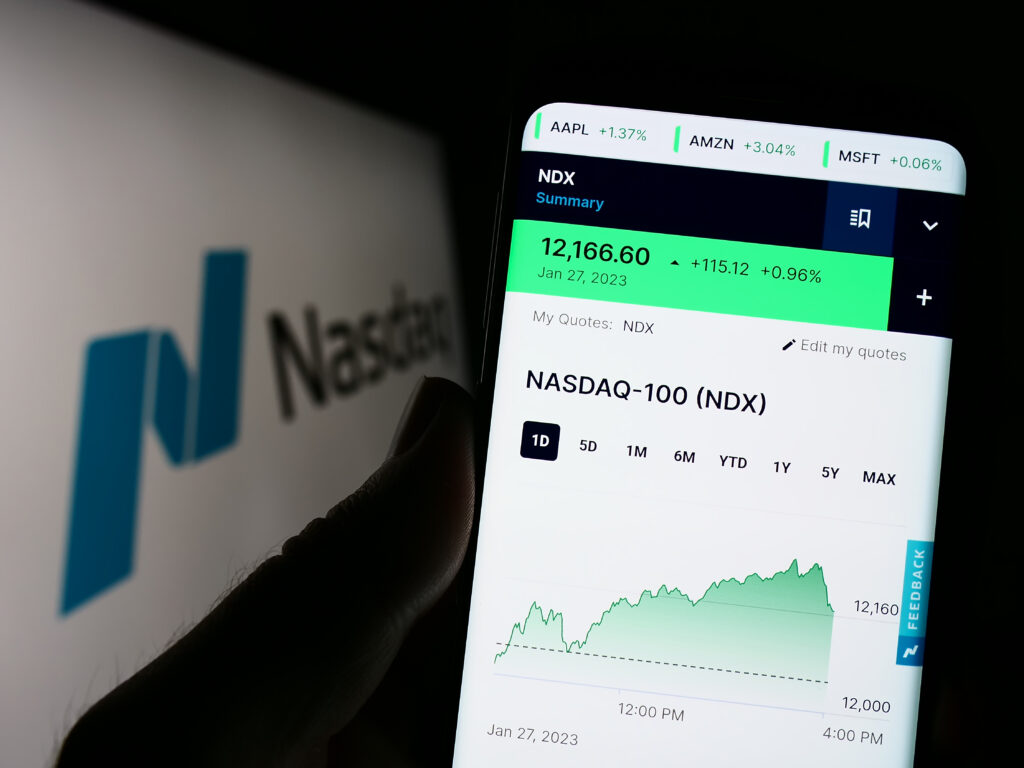
On the other hand side we have the Nasdaq 100, which includes the 100 largest non-financial companies listed on Nasdaq. This index is known for its focus on technology and innovative companies, including giant companies such as Apple, Microsoft, Amazon and Google. The Nasdaq 100 focuses primarily on fast-growing companies, which means it is considered an index with high growth potential but also higher risk. Although it includes companies in other areas such as biotechnology or consumer products, technology is the dominant sector. Therefore, the Nasdaq 100 is more oriented towards future innovation and the dynamics of the technology sectors.
The main differences between the S&P 500 and the Nasdaq 100
Among the main differences between the S&P 500 and the Nasdaq 100 is diversification. The S&P 500 includes companies from many different sectors, which means that investing in this index provides broader exposure to the U.S. economy as a whole. The Nasdaq 100 is much more focused on technology and is therefore less diversified. Investments in this index are more dependent on the performance of technology companies, which can be an advantage if the technology sector is growing, but it also increases volatility and risk.
Another difference is volatility. The Nasdaq 100 tends to be generally more volatile than the S&P 500. The technologies that make up the core of this index may have high growth potential, but are also prone to larger price swings. The S&P 500, with its broader base and more balanced composition, tends to be more stable. This can be an advantage for investors looking for less risky and stable investments, especially if they have a long-term investment horizon.
Do not miss: TOP 10 ways to make money online – and what to look out for?
Returns and risks: which index is the better choice?
In terms of returns, the Nasdaq 100 often has a higher potential for growth because it includes many fast-growing technology companies. In periods when technology shows strong growth, the performance of this index can be much stronger than that of the S&P 500. On the other hand, the S&P 500 is generally considered a more conservative index. While its returns are not as high as the Nasdaq 100, it provides greater stability and less risk of fluctuations.
Thus, risk is a key factor you should consider when choosing between these two indices. If you have a higher tolerance for risk and are looking for higher upside potential, the Nasdaq 100 may be the right choice for you. However, if you prefer stability and less volatility, the S&P 500 is probably a better choice.
What to choose for investment?
The choice between the S&P 500 and the Nasdaq 100 depends on several factors. If you’re a novice investor looking for broad exposure to the U.S. economy and lower volatility, the S&P 500 would be an ideal choice. Conversely, if you have a greater tolerance for risk and want to focus on technology and innovation, the Nasdaq 100 may offer you greater upside potential.
For many investors, combining the two indices may be an interesting option, allowing you to benefit from both worlds – the stability and broad diversification of the S&P 500 along with the dynamic growth of technology companies in the Nasdaq 100.
Continue reading: Wonderinterest Trading Ltd Review: Discover the Benefits and Features!
Conclusion
The S&P 500 and Nasdaq 100 are both excellent tools for investing in the stock market, but each offers different opportunities and risks. The S&P 500 is ideal for investors looking for stability and long-term growth, while the Nasdaq 100 is a great choice for those looking to participate in the dynamic growth of the technology sector. It is important to consider your personal investment goals, risk tolerance and time horizon before making an investment decision.